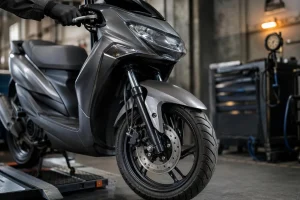


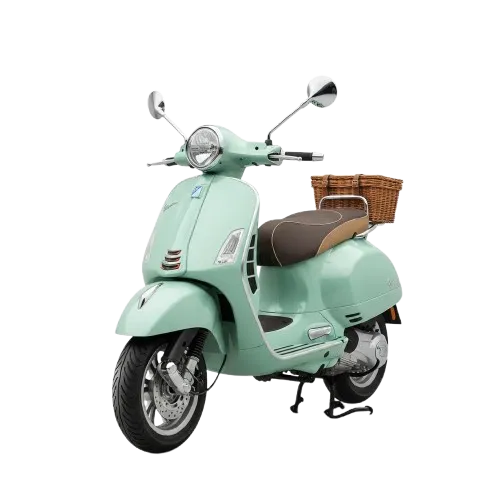
A rider walks into a Vespa shop and says the front feels soft over ordinary road surfaces, and that the nose drops under braking. He has read enough to know the front is unusual — a single-sided arrangement, not a pair of telescopic forks — and that worries him. What if the wrong part goes on? What if the unusual front is damaged by an upgrade never designed for it?
The dealer listens, then reaches for a parts list. It’s the obvious move, and it’s the wrong one. Softness and dive are descriptions, not diagnoses. They could come from a worn component, a spring that no longer suits its load, damping that has faded, or a rider comparing a scooter to something it was never built to be. He puts the catalogue down and starts asking questions.
That conversation takes a while, and it doesn’t run in a straight line. The owner asks whether the front is simply weak. The answer is no — different, not weak. Only then does the talk turn to what he actually does with the scooter. The recommendation, when it comes, is modest, and it follows his daily riding more than his budget. A basic check can also come back clean, and that’s a good outcome, not a wasted visit.
This is a representative scene based on recurring enquiries we hear at Vespa counters, rather than the documented history of one customer’s visit. No individual measurements or test results are presented. What’s worth passing on is the order of the decisions, because the same questions often come up when a Vespa front suspension is being evaluated.
Why the Vespa single-sided front is special
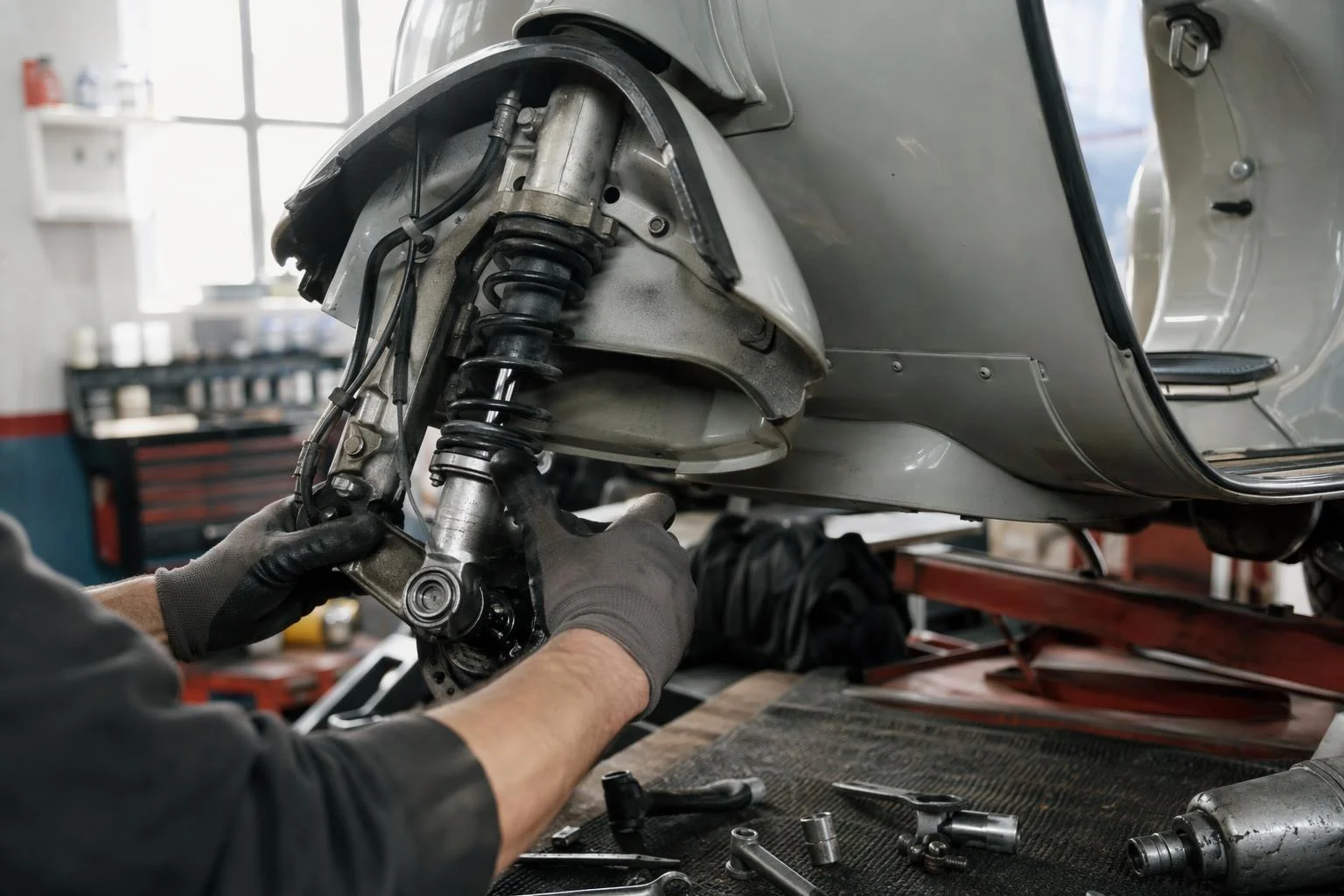
A conventional motorcycle or scooter fork is a pair of tubes with the front wheel held between them. The Vespa front is not that. The official technical sheets from Piaggio describe it as a single-sided link arm with coil spring and a single shock absorber, and the suspension overview on Wikipedia classifies the Vespa arrangement as a single-sided trailing-link fork. A page from a Vespa dealer describes the single-sided swing arm and trailing-link front as cornerstones of Vespa design, credited with creating less friction with the suspension system.
None of that is cosmetic. On the Vespa front, the link arm and the shock work together to control the movement of the wheel, so the mounting points, the link geometry and the space around them are all part of how the suspension behaves.
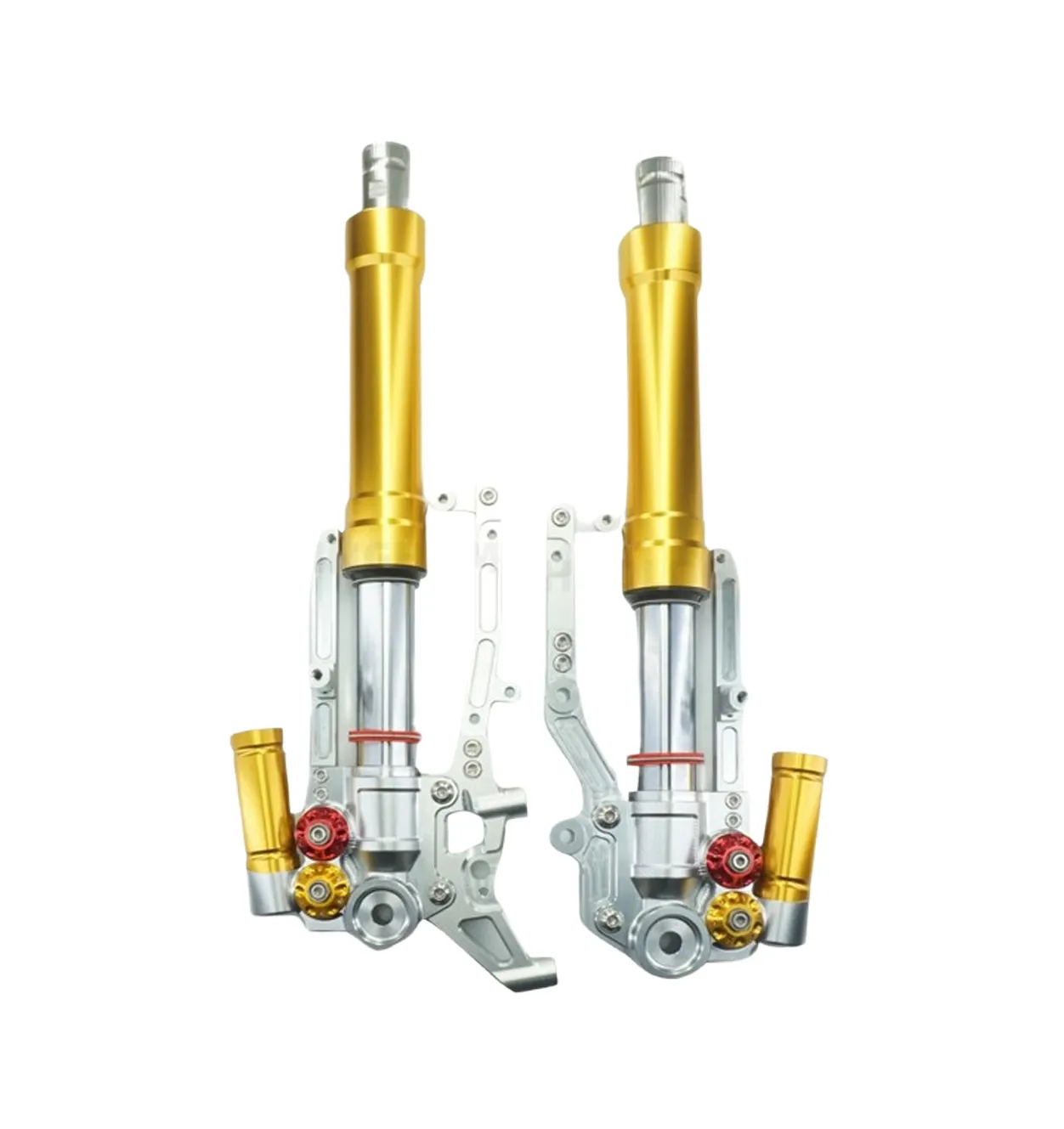
That single-sided layout is also why the replacement landscape is narrower. A fork has a handful of standard interfaces — tube diameter, clamp spacing, axle size — and a large aftermarket has grown around them. The Vespa front has its own mounting points, its own link geometry and its own packaging constraints, and those differ across models and generations. A shock that fits one Vespa platform is not automatically correct for another.
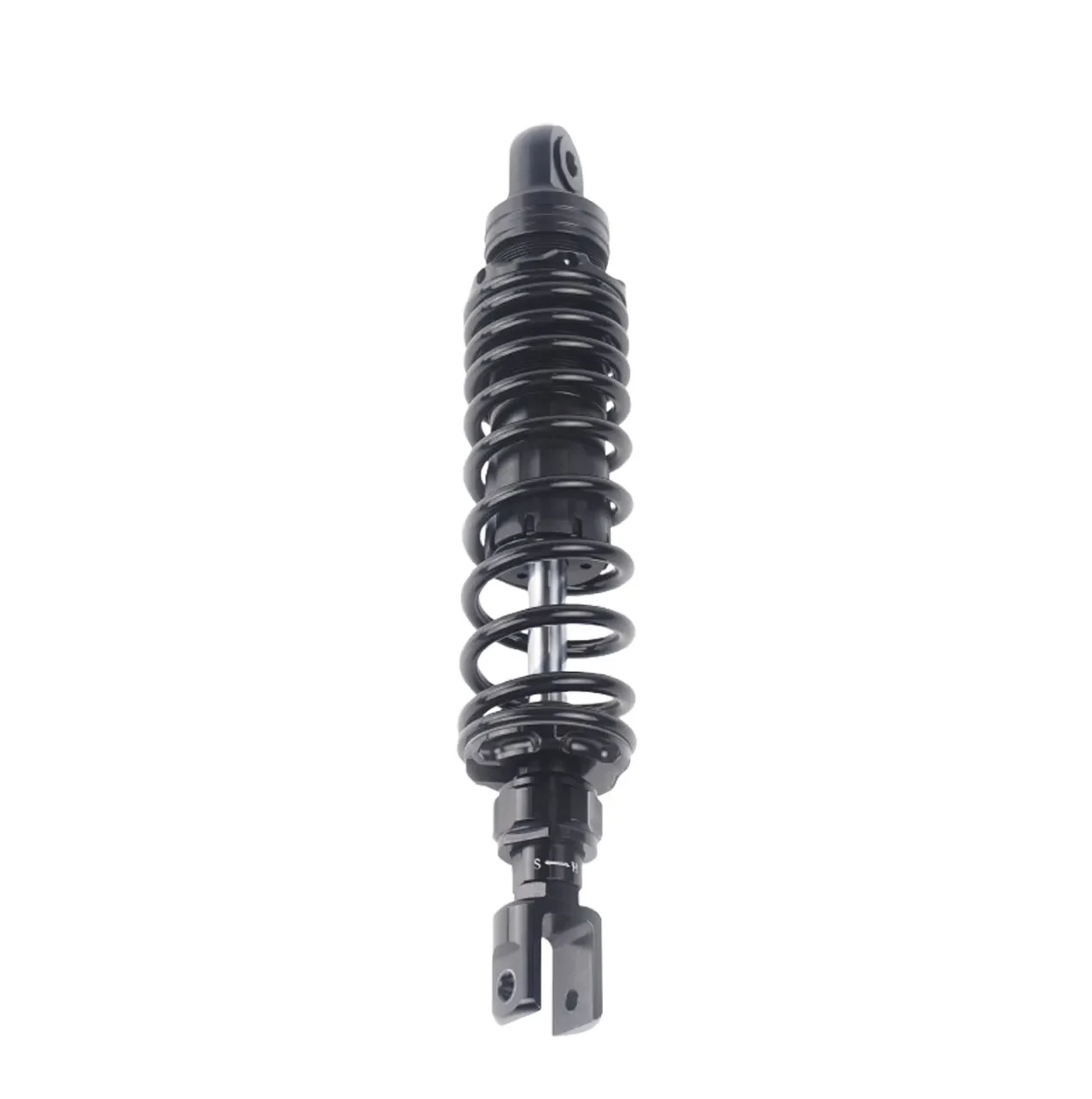
For the owner in the scene, this is the first thing worth understanding. The scarcity of options is not a sign that the front is fragile or badly designed. It just follows from a layout that was chosen for a reason and refined over decades. Which leaves one practical conclusion: on this front, fitment confirmation comes before brand preference. The question is not “which shock is best” in the abstract, but “which shock is correct for this platform, this rider and this use” — and that question cannot be answered from a product name alone.
Three complaints that sound alike
Across owner discussion and specialist Vespa technical material, three complaints come up again and again. They are worth separating, because they sound similar and are not.
The first is softness. The front feels plush in a way that stops feeling comfortable and starts feeling vague — the scooter floats over small bumps rather than reading them. On this complaint, spring suitability, preload settings and damper condition all belong on the list of things to look at, and so does whether the setting still matches the load the scooter carries. Specialist adjustment guidance is consistent on one point — spring preload changes ride height and how the suspension sits under load, not the stiffness of the spring itself. Raising preload does not make a soft spring firm; it changes where the suspension sits in its travel.
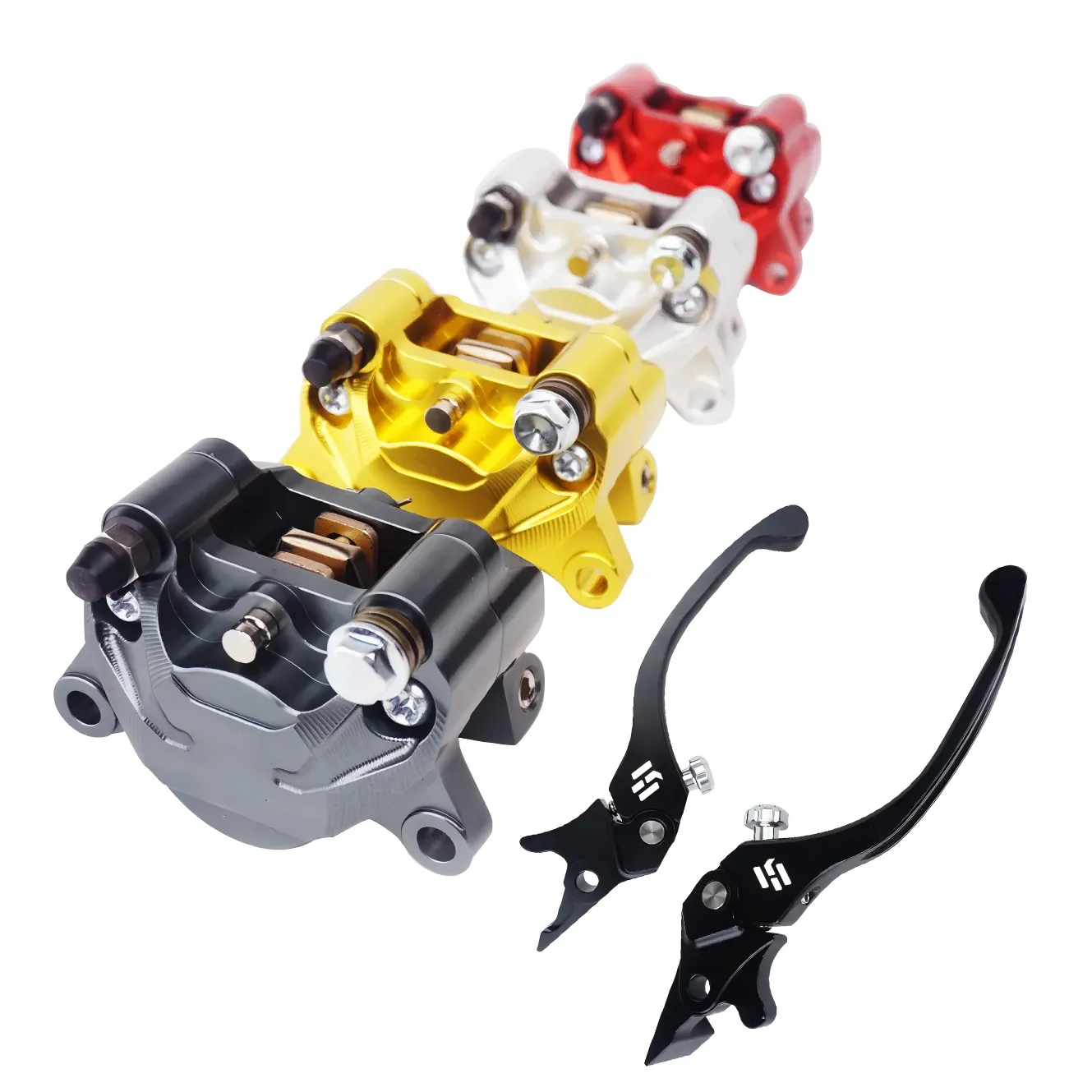
The second is brake dive. Under braking, load transfers forward and the front compresses. That is normal on any two-wheeler, and public explanations of motorcycle suspension describe it plainly: braking increases the load borne by the front wheel and decreases the load borne by the rear. What owners notice is when the movement feels excessive or poorly controlled — a nose that drops quickly and comes back slowly, or one that keeps dropping further than expected. Excessive dive needs to be assessed alongside the spring characteristics and the damping condition, not attributed to one part of the front end.
The third is a vagueness or instability feel, often described as the front not feeling planted, or as a wobble over uneven surfaces. This one may involve the shock, but it can just as easily come from the link, its bushes and bearings, the tyres or other front-end components. Specialist Vespa maintenance guidance notes that worn suspension arms show up as vibrations, rattling or a spongy steering feel, which is exactly why the state of those parts has to be checked before any damper is blamed.
The thread running through all three is the same: a complaint is not a diagnosis.
Upgrade options by use — commuting, two-up riding, and long distance
Once the front has been checked and the complaint has a cause, the next question from the dealer is not “what is the best shock” but “what does this owner actually do with the scooter”. The same platform can call for different priorities depending on the answer, and the recommendation should follow the use.
In the scene, the answer is straightforward: the owner rides into town every day and carries a passenger at weekends. That combination sets the priority. Everyday riding calls for something that stays comfortable and predictable over city surfaces without turning small bumps into a harsh ride, and specialist adjustment guidance makes the same point from the other direction — a hard suspension is not a good suspension.
The weekend passenger is the other half of the answer, and it changes the brief. A passenger alters the overall load the scooter carries and how it behaves under braking, so a setting that felt right solo may no longer be right two-up. Preload range and spring suitability matter more here than fine damping adjustment, because the setup has to cover two load cases rather than one. This is where an adjustable unit earns its place — not because adjustment is inherently better, but because this owner genuinely has two configurations to cover. The two-up load case is worth reading up on in our piece on why motorcycles feel unstable with a passenger and luggage.
Other owners come in with a different answer. A rider covering long distance is asking for consistency over sustained use, which is a different brief and can point to a different kind of product. What matters either way is that the recommendation follows the use the owner actually describes, not a general idea of the best shock. And whichever use applies, the question of what you really buy when a supplier names a part is covered in how to evaluate a motorcycle shock absorber manufacturer.
Installation and assessment
A correct part still has to match the specific bike and its mounting interfaces, and on a single-sided front the link, its bushings and the surrounding brake line all sit close to the work. Once the unit is on, the technician should confirm that the spring and preload settings suit the specific part and the load it will carry, rather than assume a setting carried over from another product. What we would say to any owner is simple: give the installation to someone who knows this front end. If the basic checks turn up nothing — no play in the link, no visible leak, no obvious wear — the right next step is a proper inspection, not a part ordered in hope.
On the result itself, the owner in the scene gets no before-and-after measurement: no dyno chart, no brake-dive figure, no lap time. What they can do is ride the scooter as they normally use it, solo and two-up, and judge whether the original complaint has improved and whether the front now behaves predictably. Those are real observations, but they are subjective, and they should be described that way. Without data, no one can say the upgrade cut dive by a set amount or improved stability by a percentage — a claim like that without measurement is invented, not observed.
Explain first, then choose
The dealer in the scene never did find a single part number that answered the question. What he did was slower and less dramatic: explain the single-sided front, separate the three complaints, check what could be checked, and then match the recommendation to how the owner actually rides. The lesson isn’t that the most expensive part is wrong. It’s that price is the wrong first question here, because fitment, load and use come before any comparison of components.
If you are working through a Vespa front suspension decision, the Kingham team is happy to help with fitment confirmation by model and by use, whichever way the conversation lands.