

A distributor’s first shock order usually starts with a supplier’s catalogue and a rough idea of what sells locally. The catalogue will show a few hundred part numbers; the rough idea is rarely specific enough to tell you which thirty of them to buy.
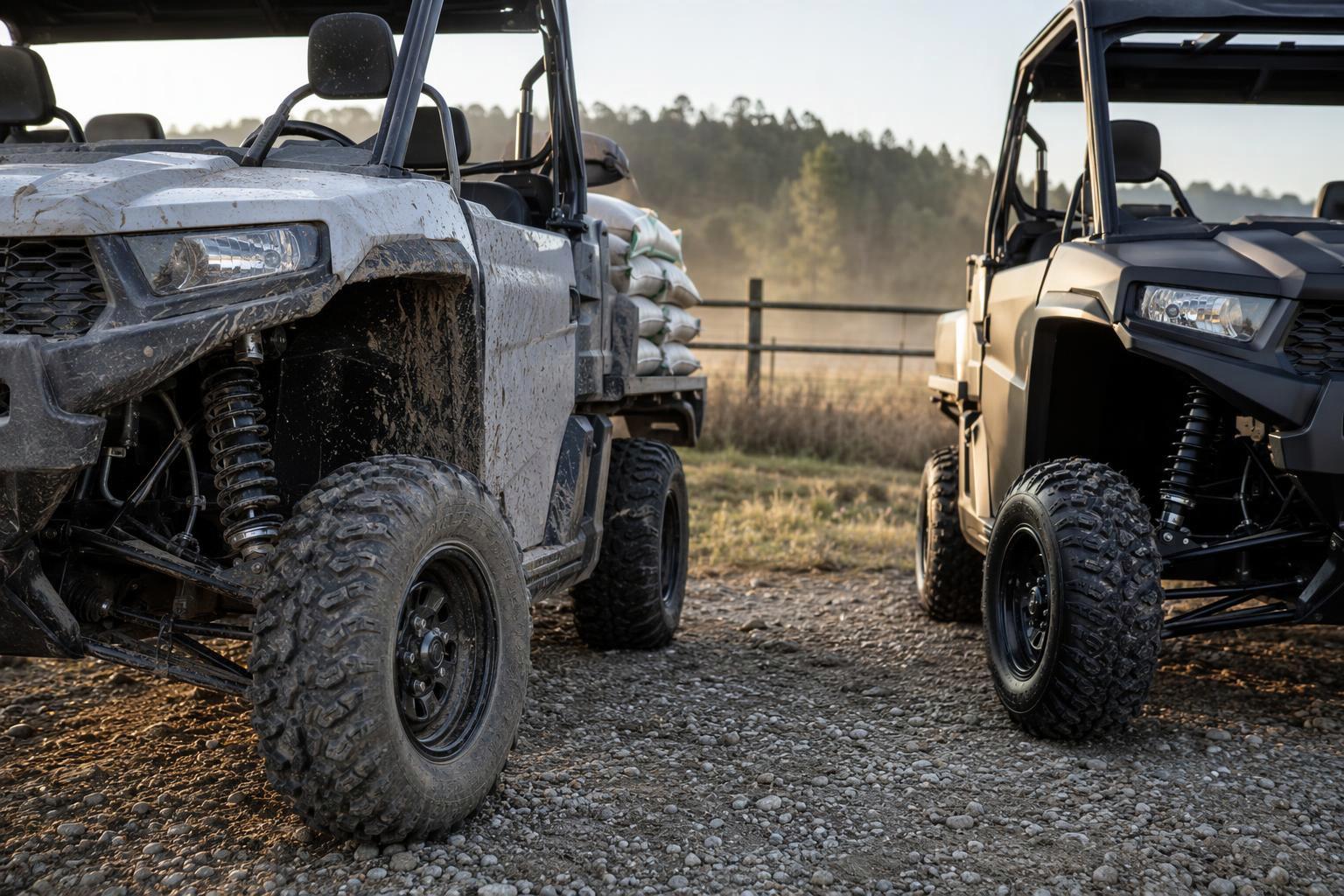
What narrows it down is a record of the machines actually in your territory and what their owners do with them. A ranch UTV hauling feed and a similar machine used for weekend trail rides put different loads through the same-looking shocks, and the parts their owners end up replacing are not always the same. Getting that distinction into the order is most of the work.
The rest is dimensions. A shock can match on length and bolt diameter and still foul the arm or leave too little clearance at full compression, so model, year, suspension layout and mounting configuration belong in the check before a part number goes onto the list.
The sections below follow that order: sorting the local vehicle parc, reading the applications behind demand, turning both into a first batch, pricing it with the parts that support it, and checking a supplier before the container is booked. Territory-level demand is the only market figure this guide treats as reliable, which is why it does not offer a size estimate for the category.
Understanding the ATV and UTV Suspension Market
Brand and price tier are the obvious fields to sort a customer list by. Straddle versus side-by-side is the one that changes the buying pattern, because it changes who sits on the machine, what it carries and how much load reaches the suspension.
The U.S. Forest Service draws the line clearly for its own operator-training purposes: a UTV has side-by-side seats, a steering wheel, foot pedals and a rollover protection structure, while an ATV has a straddled seat and handlebars (Forest Service, Chapter 1). Take it as a training classification, not a product standard. It is handy for filing customer records consistently, but a UTV with cargo capacity or a single-rider ATV still carries whatever its rated capacity, accessories and actual use put on it.
Drivetrain is a separate fitment attribute, not a substitute for vehicle identification. Two- and four-wheel-drive versions may both exist in the same model range, and suspension layout can change between models and model years. Application guides such as the Camso ATV/UTV application guide list vehicle configurations and suspension layouts separately when matching track systems. A shock check should work the same way, verifying the exact configuration rather than trusting a model name.
Which corner wears first is a question for service records and customer enquiries, not something a 2WD or 4WD label answers.
Application Scenarios and Suspension Demands
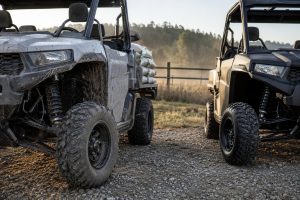
Once the vehicle list is solid, the next question is what those vehicles are asked to do. Take the same UTV model: one machine hauls feed for a season, the next runs rocky trails on weekends, and the shocks their owners end up replacing are not necessarily the same. The order has to make room for both.
Farm and utility work. These vehicles may be used for transporting equipment, carrying materials, towing or general property maintenance. What matters for your stocking decision is how each customer uses the machine and how often it runs. A fleet carrying heavy loads on uneven ground may need different spring support and damping characteristics from a vehicle doing light transport on relatively smooth surfaces.
Before selecting anything, ask about the models in service, typical operating loads, terrain, usage frequency and maintenance history. The answers tell you whether the customer wants standard replacement shocks, something built for heavier work, or a different suspension setup.
Recreation and trail riding. These buyers tend to care about ride comfort, handling, suspension travel or how the machine copes with uneven ground. How far that goes depends on whether the vehicle sees casual trail rides, harder off-road routes or something closer to competition use.
Find out which platforms are common in your area, then ask whether those customers are after a straight replacement or an upgrade. Let the riding conditions and the suspension they already have guide what you offer, rather than assuming every recreational buyer wants adjustable shocks.
Load, terrain and durability requirements. Load and terrain are more useful read together than ticked off one at a time. A heavy load on smooth ground mostly asks for spring support and sag control; run the same load over rough ground and you add repeated impacts, which puts more pressure on damping performance and on how long the components last. Similar mounting dimensions still don’t make one shock a substitute for another — spring characteristics, damping specifications and the intended load range need checking too.
That comes down to five questions: the vehicle, occupants, cargo and accessories it carries; the terrain it works on, from paved roads to gravel, mud and rock; how often and how long it runs; the size and model mix of the fleet; and the replacement and repair history of the shocks currently fitted. Answer those before moving on to the first-batch selection.
Distributor Selection Matrix: What to Stock First
You now have a vehicle list and a set of use cases. The table below is how the two turn into an order. It won’t give you part numbers, because the right SKUs depend on which machines your region actually services and on what your own enquiry records show.
Application / customer need | Product positioning | First-batch approach | Conditions to verify |
|---|---|---|---|
Farm & utility | Standard replacement, with load-oriented options where the requirement is explicit | Cover the models that already show steady local demand; consider load-oriented products only for accounts with a stated heavy-duty requirement | Exact model and year, operating load, terrain, usage pattern, fitment data |
Recreation & trail riding | Standard replacement, with performance upgrades as a second step | Cover replacement demand on mainstream platforms first, then test a small selection of performance products | Model mix across the territory, riding conditions, what customers are actually asking for, performance expectations |
Mixed or unclear demand | Core replacement range | Keep the first batch narrow and cover only vehicles whose demand you can confirm | Actual enquiries, vehicle information, whether customers intend to buy |
Unverified fitment | No immediate stocking commitment | Hold as order-only until fitment information is complete | Full vehicle identification and product-level fitment data |
Two cautions before you use the rows. Farm and utility demand does not automatically mean load-oriented shocks, and recreation does not automatically mean adjustable ones — the segment only sets the direction of the product requirement. What actually goes into the order still depends on the vehicle, the customer’s stated requirement and the fitment data the supplier can produce.
The last row is easy to overlook, but it is important for protecting the first batch. A customer who asks for a model you cannot yet verify is real demand, but it isn’t a reason to hold stock. Quote it, confirm the fitment data, and let the order pull inventory rather than the other way round. Set a lead time you can honestly quote before accepting the order, because an order-only line still carries a service commitment.
Setting the width of the opening range. Start with what you already know. The customer list comes first, then the models your dealers, workshops or service partners handle most often, and the platforms a supplier promotes last.
A short opening range on a handful of high-demand platforms with verified fitment is easier to manage than a wide spread of unverified applications — you learn the product, you see which lines actually move, and you have real sales data before you extend coverage. It is the same platform-first approach we took in planning a first Yamaha scooter shock order, applied to a category with far more vehicle variation.
Where replacement demand is already visible, standard replacement products are the obvious place to start. Performance products answer a different question and are better trialled in a separate, smaller purchase than folded into the opening order.
Spare parts are part of this decision, not a later add-on. For each line in the first batch, decide which bushings, seals, mounting hardware or service components should travel with it, subject to whether the product is built to accept them. Quantities and replenishment come next.
Pricing Structure and Spare Parts Planning
Once the first batch is settled, two things need planning together: the price each product sells at, and the parts that keep it sellable.
Setting price tiers on market evidence. Landed cost sets the floor, but the selling price also has to account for local competition, customer expectations, channel margins and after-sales expenses. Standard replacement shocks and performance-oriented products usually sit at different positions, since they meet different buying motives.
The tier structure should also be read as a service promise. A stocked product carries inventory costs and an expectation of faster availability, while an order-only line requires a different delivery and service arrangement. Compare specification, fitment coverage, supplier cost and expected support requirements with what is already available in your market before you fix a tier, and remember that a low purchase price can look far less attractive once freight, holding cost and warranty exposure are included.
Spare parts and replenishment. How deep you go on spares starts with the construction of the products you selected and the supplier’s replacement-parts policy. Some shocks have separately available bushings, seals or mounting kits; others are replaced as complete units for certain types of damage. Confirm which is which before you decide what travels with the shipment.
Set the stocking depth per tier rather than across the range. For a core replacement line with confirmed recurring demand, distributors may choose to hold commonly required installation or service components alongside complete units. For newer performance products, a smaller initial spare-parts commitment may be more appropriate until demand becomes clearer. Order-only products should also have a defined parts-supply arrangement, even if the distributor does not hold those components in local inventory. Then fix the replenishment rule: review the reorder point against actual sell-through rather than a supplier’s suggested ratio, and confirm the lead time for the service parts separately from the lead time for complete units, since they are often not the same.
Entry Checklist: What to Verify Before You Scale
Everything above is still a plan. These are the checks that stand between the plan and a paid order. They’re ordered roughly by what a mistake costs: a fitment error caught before the order costs an email; the same error caught after the container lands costs returns, workshop hours and a customer’s confidence.
Supplier verification. Verify the supplier before you verify the part. Ask for relevant quality certifications, product specifications, dimensional drawings and inspection records, and check the issuing organisation, the certification scope and the applicable production site rather than relying on a certificate logo alone. The questions worth asking in that conversation are set out in our guide to evaluating a shock absorber manufacturer. If the product is supplied under a specific customer’s quality programme, confirm whether additional inspection or approval documentation is required. Where key specifications, inspection records or quality documents aren’t available, ask what alternative evidence the supplier can provide before you place the order.
Compatibility verification. Request fitment data for the exact vehicle, model year and front or rear position. The minimum set is the model and model year, the suspension layout, extended and compressed length, stroke, mounting type, mounting width and hole diameter, bushing dimensions, spring specification and the installation clearance available on the vehicle. Length and bolt diameter alone are not enough: a shock can match on paper and still foul the arm, the frame or a neighbouring component. Ask for this data per application, not per product family.
After-sales verification. Confirm in writing how a claim will be handled before the first order ships: warranty coverage and duration, defect reporting, return and replacement procedures, who inspects and who accepts responsibility, how batches are traced, which replacement components are available, and how long those components take to restock.
None of that survives as an informal understanding. Get the answers into the order file, so a claim two years later runs on the terms you agreed rather than on recollection.
Small-batch testing. A small initial order lets you verify product compatibility, installation requirements and customer response before committing to a wider range. Pick vehicle applications already identified through customer enquiries or existing service demand. Record installation time, any interference during fitting, whether the job needed modification, abnormal noise, leakage or other evident quality problems, and whether the product performed as expected under the appropriate load and usage conditions. Alongside that, track whether the trial products bring in actual orders, acceptable margins and follow-up enquiries from the target customers. Where it makes sense, keep samples or batch records for later comparison and quality investigation.
When to expand, when to stop. Expand when the initial products have shown reliable fitment, acceptable quality and repeat orders. Before you raise the quantities, look at sales performance, gross margin, return rates, inventory turnover and spare-parts requirements, and check that replenishment is holding steady. Hold or discontinue when fitment information stays incomplete, the same quality problem keeps coming back, after-sales responsibilities are unclear, or replenishment becomes unreliable. A good result in one vehicle application is not approval for the whole range, so record the outcome per batch and per vehicle family and let those records set the size of the next order.
Turning the Vehicle List into a Stocking Plan
A workable ATV/UTV suspension range comes out of a short list of machines you can actually name, the way their owners use them, and fitment data you have checked rather than assumed. Everything after that — the opening order, the price tiers, the spares, the small batch — is a way of testing that judgment with as little money at risk as possible. Start narrow, and let your own sales records tell you when to widen.
Explore Kingham’s ATV/UTV suspension range or contact our team to discuss your product selection and stocking requirements.