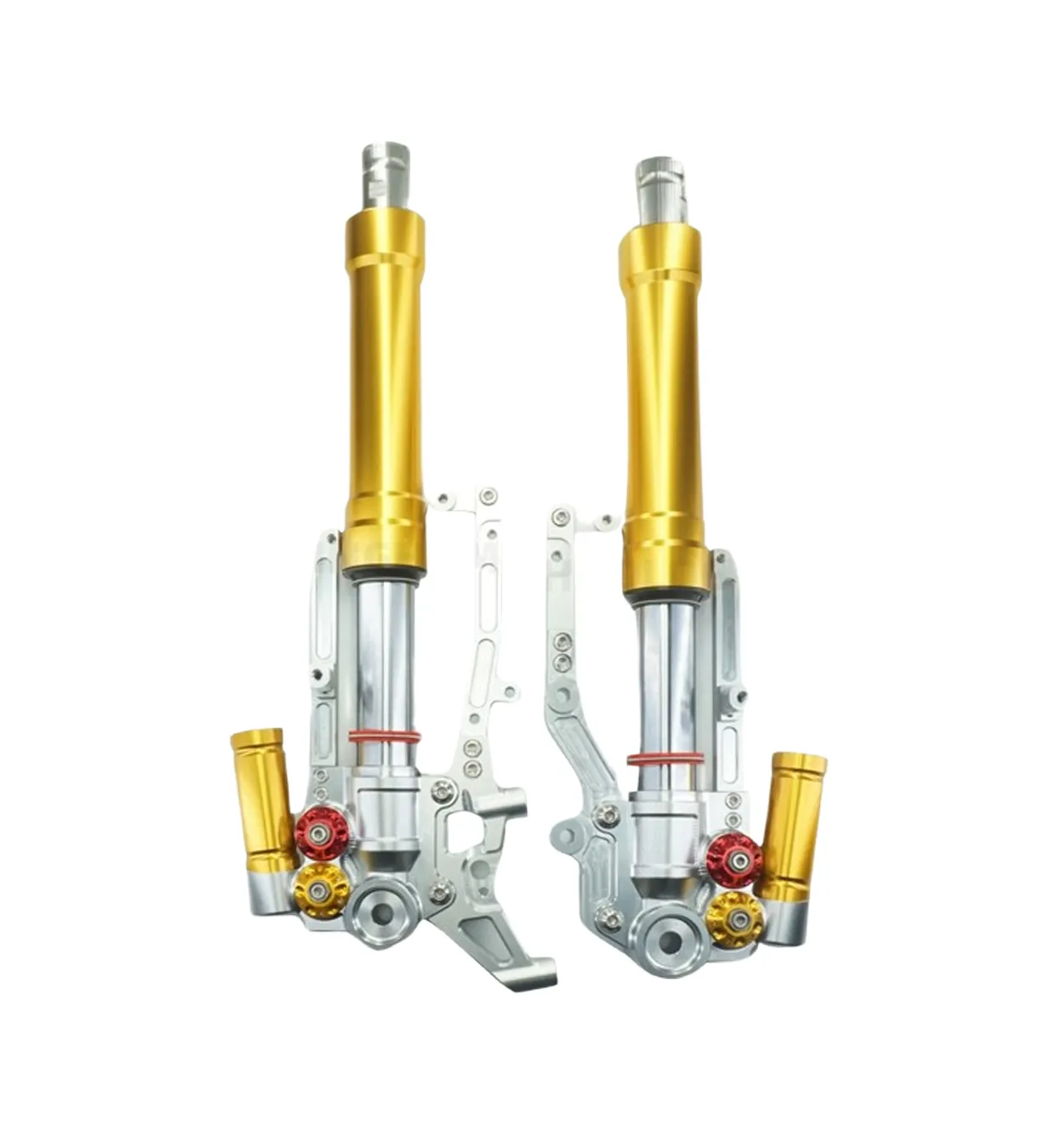
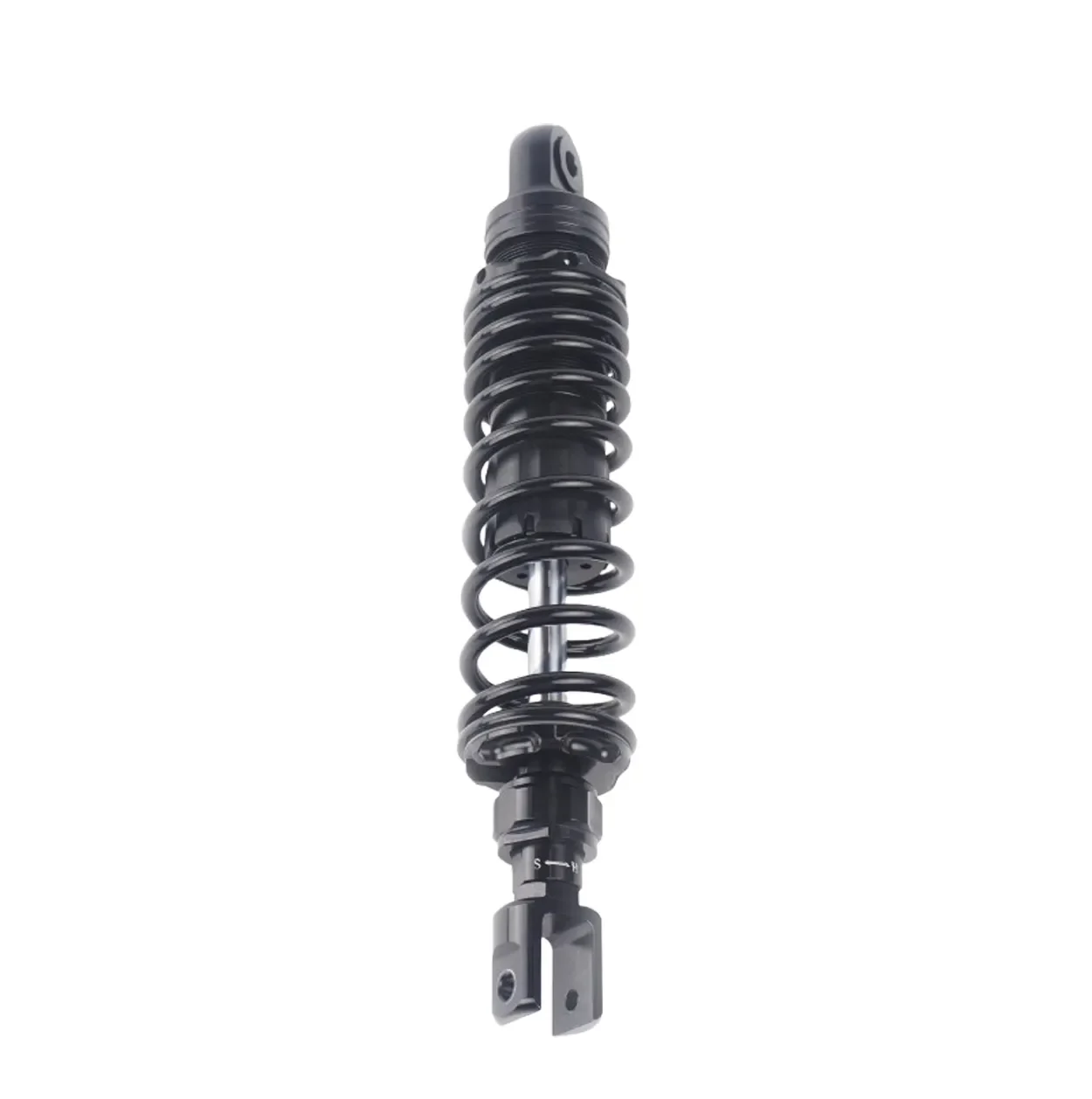
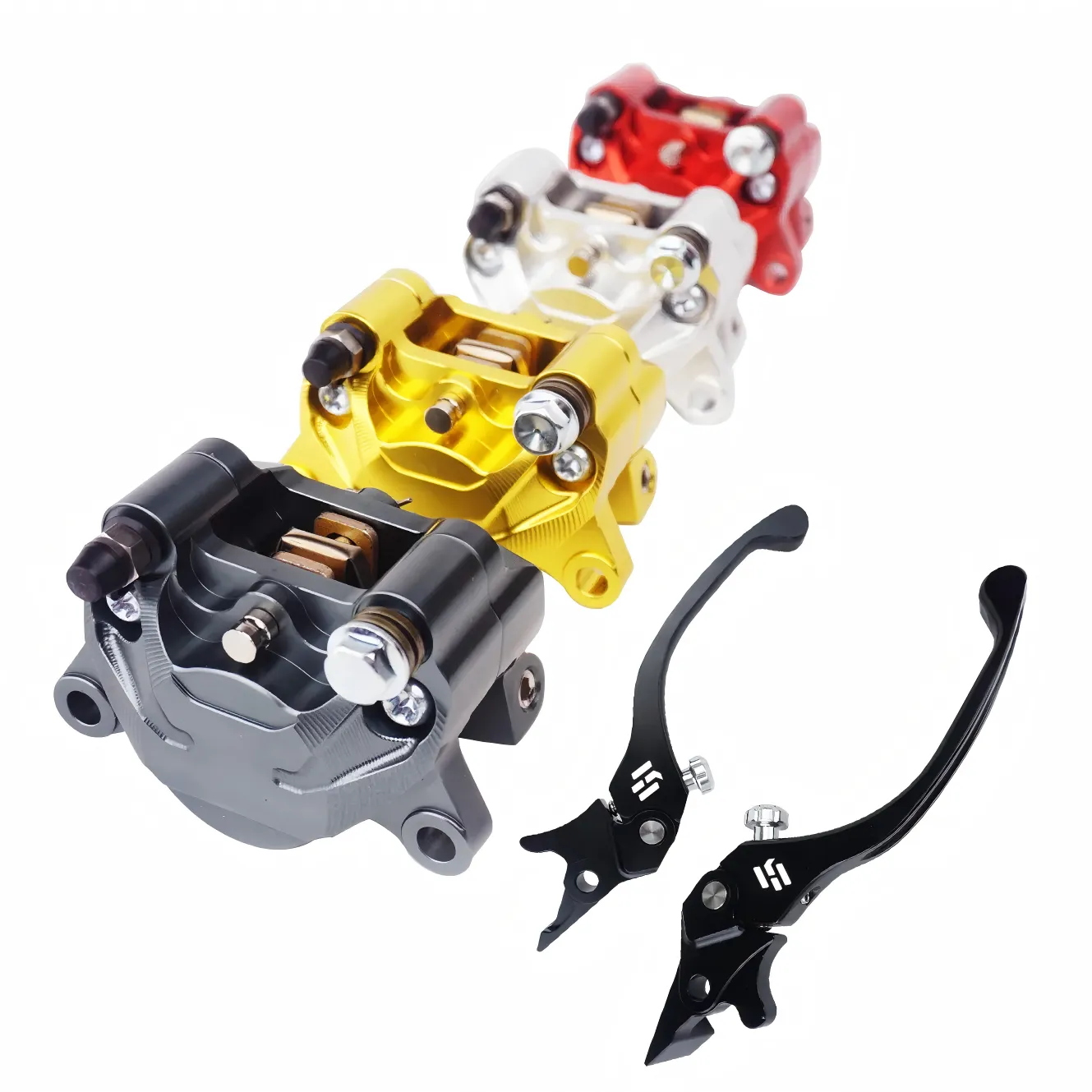
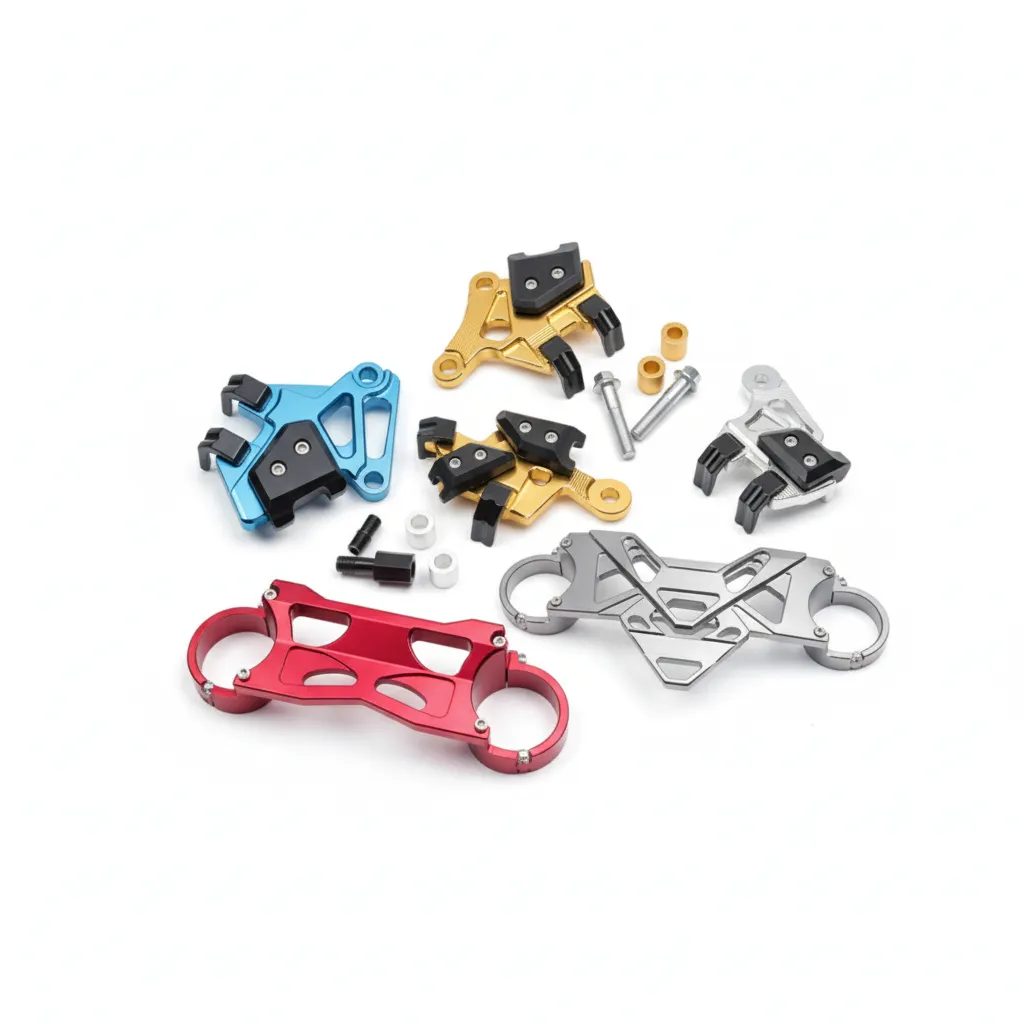


What Are Motorcycle Shock Absorber OEM/ODM Services?
Motorcycle shock absorber OEM/ODM services are often evaluated based on supplier capability—but what engineering teams actually need is a way to compare suspension engineering services, OEM manufacturers, and validation systems in a structured way.
If you’ve ever run a suspension program that looked “done” in prototype but fell apart at volume, you already know the hard truth: OEM/ODM success isn’t decided by one clever shim stack. It’s decided by whether your supplier can translate requirements into production reality—repeatably, audibly, and with evidence.
For an OEM engineering + procurement team, the goal isn’t just “a shock that feels good.” It’s a controlled lifecycle where:
requirements don’t mutate mid-stream
validation is tied to real use cases (not lab theater)
the first production batches behave like the approved samples
change control doesn’t become a permanent emergency
This article lays out a stage-gated motorcycle shock absorber OEM/ODM lifecycle you can use to manage programs for scalable production—especially when SOP timing, APQP/PPAP readiness, and batch stability matter.
Why Motorcycle Shock Absorber OEM/ODM Projects Fail
Most failures are not “mysteries.” They’re predictable failure modes that show up when engineering, quality, and procurement don’t share one controlled process.
Long development cycles and delayed time-to-market
Development drags when requirements aren’t translated into measurable engineering targets early.
Typical causes include:
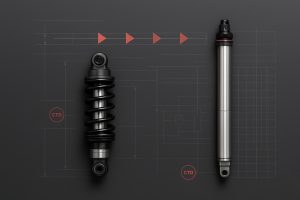
unclear CTQs (critical-to-quality characteristics)
late packaging conflicts (mounting interfaces, reservoirs, clearance)
too many open variables at once (valving, spring, oil, adjusters, finishes)
no gate criteria—only opinions
When there are no gates, iteration becomes the process.
Stage-Gated Development Process for Scalable OEM/ODM Programs
On paper, most suppliers will tell you they “do OEM.” In practice, you’re buying one of three capability levels—and the wrong match is where programs blow up.
Design-only partner: They can help with conceptual design and some CAD, but they can’t own validation, tooling readiness, or PPAP-level evidence. Good for early exploration; risky for SOP.
Prototyping-only supplier: They can build great samples, but their prototype build path doesn’t map to line-speed assembly, controlled processes, and stable CTQs. This is where “the sample feels perfect” turns into “production feels different.”
Full-stack, SOP-ready OEM/ODM manufacturer: They can translate requirements into CTQs, validate both design and process, and hold performance stable across batches with traceability and change control.
A simple way to frame it for sourcing: low-cost vs validated isn’t about piece price—it’s about whether the supplier can prove repeatability with evidence (capability snapshots, control plans, and reaction plans).
Selection Guide: Which OEM/ODM Supplier Type Fits Your Program?
If your program looks like… | You likely need… | Why it fits | Common failure if you choose the wrong type |
|---|---|---|---|
You’re still validating packaging, stroke, and mounting interfaces | A design-only partner (short-term) or a supplier that can support concept DFM | Keeps iteration cheap while you lock interfaces and CTQs | You start tooling or quoting too early and absorb late changes |
You need ride-feel tuning quickly, but SOP timing is flexible | A prototyping-only supplier (with clear handoff plan) | Fast samples help you converge on valving/adjuster mapping | Prototype build path doesn’t map to production, causing batch drift later |
You have SOP timing, warranty exposure, and batch stability requirements | A full-stack, SOP-ready OEM/ODM manufacturer | They can validate design and process, and keep CTQs stable across batches | “Great sample, unstable production” becomes a warranty and rework problem |
OEM Supplier Comparison Table
Supplier type | What they’re good at | Typical risks | Keywords match |
|---|---|---|---|
Design-only partner | Early concept direction, packaging review, basic DFM feedback | Weak link to manufacturing reality; validation and ramp are pushed back to you | concept suspension design, early DFM |
Prototyping-only supplier | Fast CNC samples, quick iteration on feel and adjuster mapping | Prototype process ≠ production process; batch stability issues after SOP | prototype shock absorber, ride-feel tuning |
SOP-ready OEM/ODM manufacturer | CTQ-driven engineering, controlled assembly parameters, batch traceability, change control | Higher up-front discipline required; may reject unclear requirements | motorcycle shock manufacturers, OEM suspension system supplier |
Before you jump to RFQ questions, use the table above to clarify what you’re actually buying; then use the checklist below to decide how you’ll judge whether a suspension OEM/ODM manufacturer can deliver it at SOP.
How to Evaluate a Suspension OEM Partner
If you want a supplier who can scale, you need to evaluate them like a system—not like a sample shop.
Use these questions in RFQs and technical reviews with any OEM suspension system supplier:
Can they translate your brief into CTQs for performance, durability, packaging, and appearance?
Can they show measurement capability for those CTQs (e.g., MSA where it matters)?
Can they demonstrate process control for oil fill/bleed, nitrogen charge, torque sequencing, and critical tolerances?
Can they prove batch stability with dyno sampling rules and defined acceptance windows?
Can they show change control discipline so “one tweak” doesn’t split batches or create mixed builds?
Validation and Production Control
How to Choose a Motorcycle Shock Absorber OEM Manufacturer
If you’re shortlisting an OEM motorcycle suspension supplier, keep the selection criteria tied to evidence—not promises.
A quick decision filter:
Start with CTQs: confirm the supplier can turn your ride-feel and packaging brief into measurable targets.
Check validation relevance: ask how their dyno, fatigue, and environmental tests map to your duty cycle.
Verify process control: oil fill/bleed, nitrogen charge, and torque sequencing should have documented settings and reaction plans.
Ask for stability proof: look for batch sampling rules and acceptance windows, not just “a good sample.”
This same framework helps you compare custom motorcycle suspension OEM options without getting distracted by prototype-only performance.
Validation is where programs either become scalable—or become warranty risk.
A practical validation stack should answer two questions:
Does the design meet requirements under realistic stress?
Can the process repeatedly build the design within defined windows?
The gap happens when prototypes validate “function,” but production introduces different realities:
tooling and fixture changes shift tolerances
assembly at line speed isn’t the same as hand-built samples
measurement systems drift or aren’t capable (MSA issues)
process settings (oil fill/bleed, nitrogen charge, torque) aren’t controlled tightly enough
If your acceptance criteria are “this sample feels right,” you’re guaranteeing rework later. Consistency requires:
defined CTQs for performance and assembly
control plans tied to those CTQs
traceability to connect any drift to a batch, shift, material lot, or machine
This is why APQP-style thinking matters: validation shouldn’t be a late-stage event—it should be staged discipline with evidence.
Durability and fatigue testing under high-cycle conditions
Fatigue validation should be tied to the load cases your platform actually sees:
high-cycle vibration and repeated stroke events
worst-case loading (passenger + luggage, braking events, rough road duty)
seal wear and leak risk over time
If your supplier can’t explain how the test relates to your duty cycle, you don’t have validation—you have activity.
Environmental stress testing: heat, salt, and UV resistance
Environmental validation is where “looks good” becomes “looks good after a season.”
At minimum, align on:
corrosion expectations (salt exposure, material choices)
thermal stability (hot-fade protocols, oil/pressure stability)
finish durability and color stability (especially with branded anodizing)
Production Consistency and Quality Control in Suspension Manufacturing
This is the conversion zone for OEM engineering procurement because it directly predicts SOP stability.
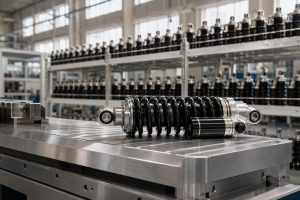
Batch-to-batch damping consistency: dyno testing strategy
Dyno testing can be used as a stability monitor—not just a development tool.
A robust approach typically includes:
defining which CTQs are verified by dyno sampling (e.g., force at key velocity nodes)
setting acceptance windows that reflect what the vehicle can tolerate
defining sampling rules by batch size and change events (new tooling, process change, material change)
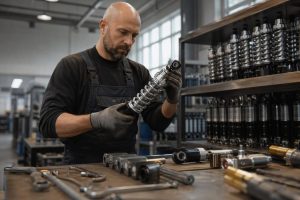
Process traceability and suspension manufacturing quality control
Traceability is not a buzzword. It’s how you avoid “we don’t know what happened.”
Evidence you should expect in scalable programs:
serialized tracking for critical components and finished units
documented incoming, in-process, and final checks
reaction plans for out-of-window results (what happens when drift is detected)
For suppliers operating under IATF 16949 and ISO 9001 systems, traceability and process discipline are part of the baseline expectation.
If you want a concrete example of how a supplier can structure gates and evidence for tooling, FAI, and SOP readiness, see Kingham Tech’s internal walkthrough on motorcycle suspension OEM/ODM development.
Cost and Risk Trade-Offs in OEM Suspension Programs
Procurement pressure often shows up as one request: “Can we make it faster?”
The right question is: What can we parallelize without corrupting validation quality?
Balancing performance requirements with production cost
Cost doesn’t only live in piece price. It lives in:
scrap and rework during ramp
extra inspection because capability is weak
warranty exposure because validation was thin
logistics volatility when schedules slip
A supplier who can show stable CTQs, capability snapshots, and a right-sized PPAP package often lowers total cost even if unit price isn’t the absolute minimum.
Optimizing lead time without compromising validation quality
You can usually compress timelines in three ways:
Front-load DFM so tooling and process constraints are known early.
Run parallel workstreams once interfaces and CTQs are frozen (prototype iterations alongside fixture/tooling development).
Use a pilot run + FAI gate before committing to volume.
This is the same logic behind treating PPAP as the validation output of APQP (see How PPAP fits into APQP).
Risk Management in OEM Suspension Development
A scalable program assumes things will change. The question is whether changes are controlled.
Managing design iteration risks
Iteration risk gets dangerous when changes happen without:
updated CTQs
updated DFMEA/PFMEA logic
updated control plan and inspection strategy
clear disposition of old stock and mixed builds
If the supplier can’t show change discipline, “one small tweak” becomes a batch-splitting event.
Ensuring engineering stability across product lifecycles
Lifecycle stability is a procurement issue, not just engineering:
what triggers a design/process change?
how are changes approved?
how is version control handled across drawings, BOM, and test reports?
how do you ensure service parts match the approved baseline?
A controlled lifecycle is what keeps year-two warranty from becoming a fire drill.
Conclusion: A Controlled Engineering System for OEM Suspension Programs
Motorcycle shock absorber OEM/ODM success is rarely about hero engineering. It’s about a controlled system that makes engineering reproducible at scale.
If you want a simple way to evaluate suppliers, start with this: Ask them to walk you through their gates, and show the evidence they produce at each gate.
For reference, you can also review Kingham Tech’s gated workflow from rider brief to tooling and SOP (linked earlier) and their performance suspension development framing.
If you’re comparing motorcycle shock manufacturers, prioritize the ones that can prove batch stability, traceability, and change control—not just deliver a great prototype.
Next step: If you want, share your platform’s interface constraints and performance targets, and we can map them into a supplier gate checklist (CTQs, validation plan, and PPAP-ready evidence) you can use for RFQs.