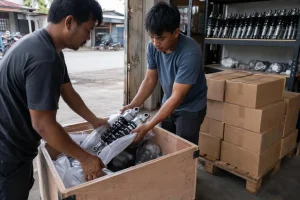
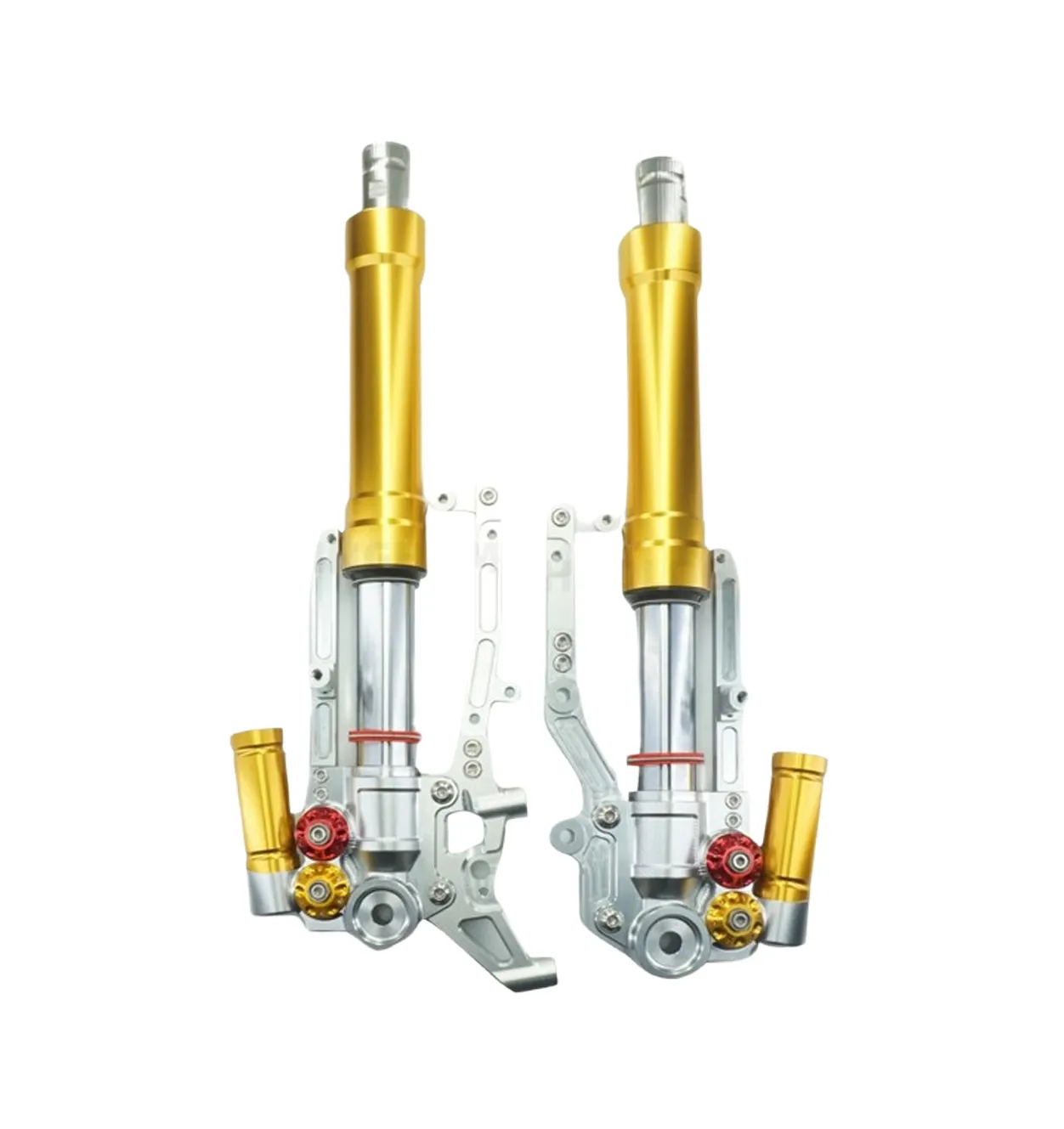
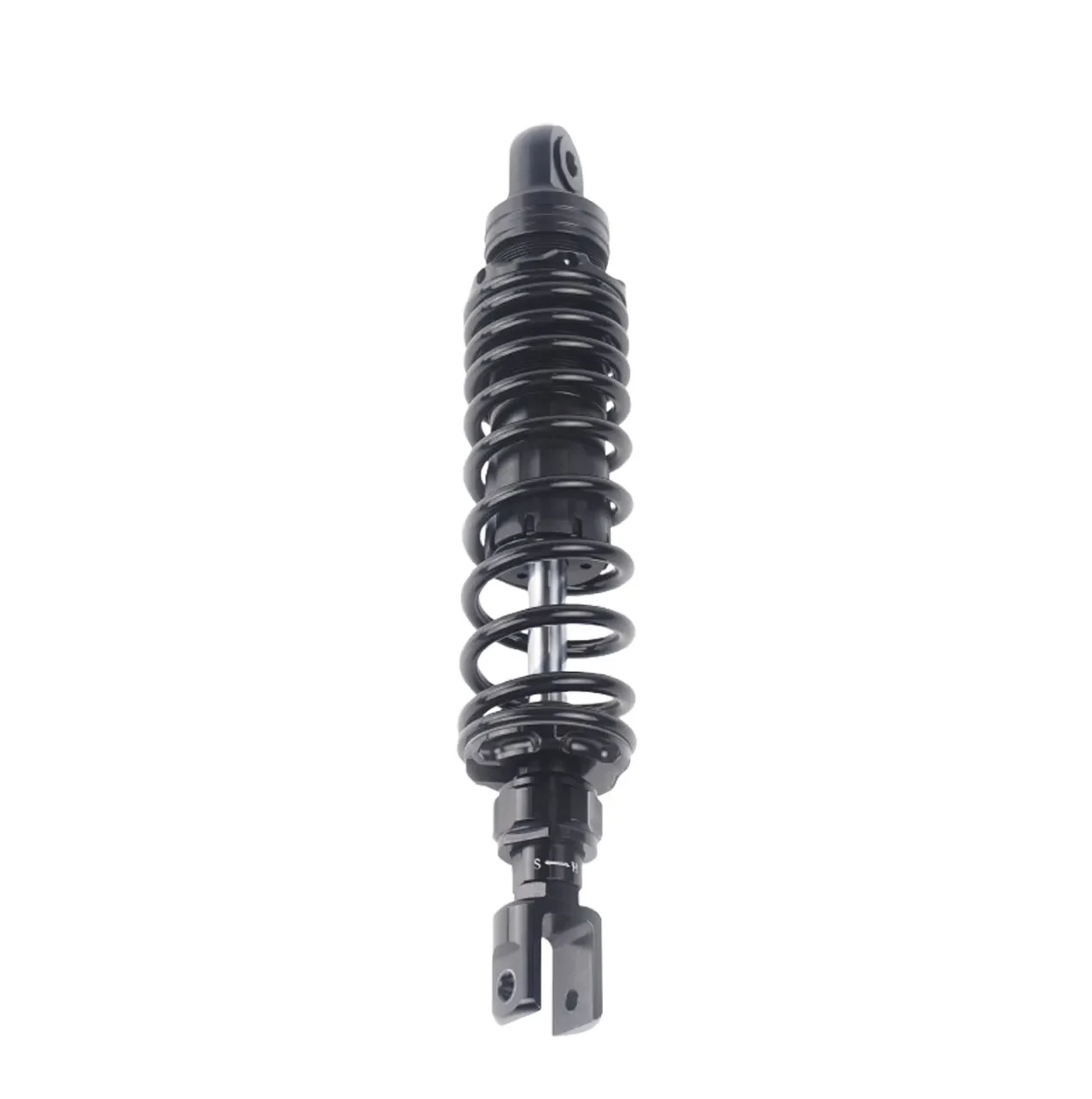
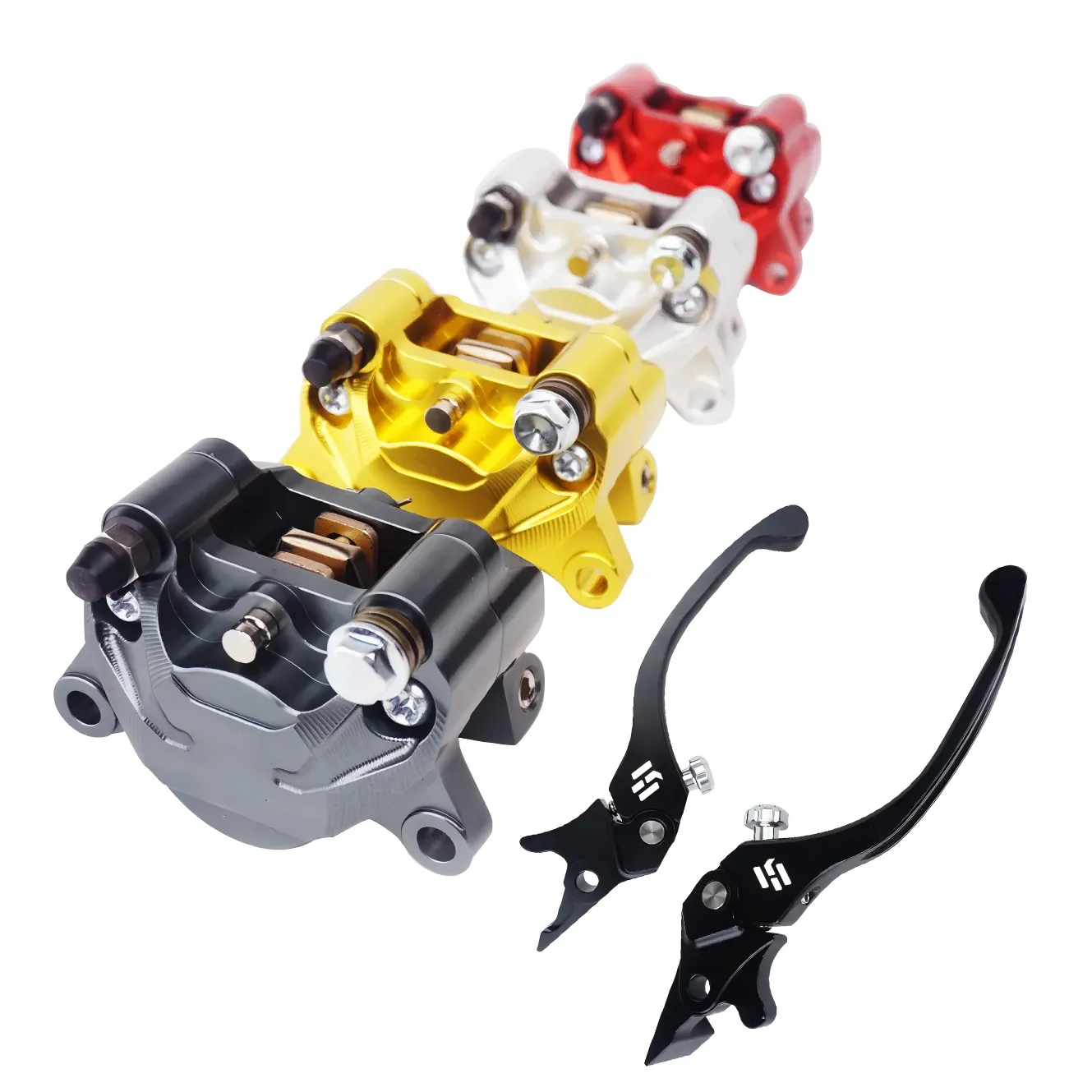





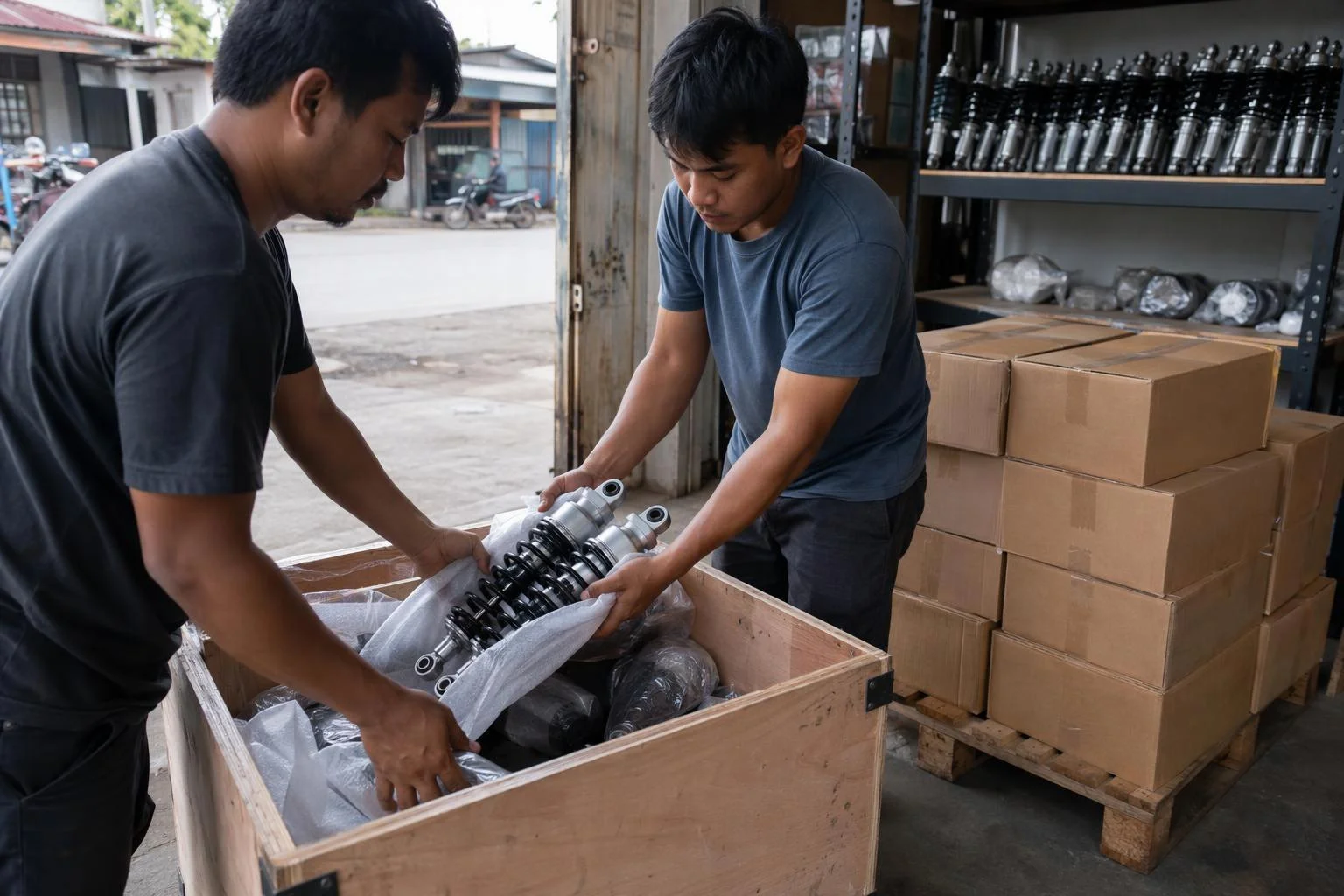
A distributor placing a first mass order for motorcycle shock absorbers is not really buying parts. They are buying confidence that unit 4,000 will perform within the same agreed specifications as unit 1, that the container arrives when the catalog launch needs it, and that when a rider returns a leaking shock six months later, someone will answer for it. Most supplier failures that hurt distributors are not dramatic. They are quiet: a specification that drifted between the sample and the bulk run, a batch that came out of a different anodizing tank, a lead time that slipped three weeks, a warranty conversation that turns into a negotiation over who pays for freight.
This guide is for the person who has to sign off on that order. It starts with the order itself and works outward, and the same sequence runs on any factory, ours included. The standards behind it are third-party ones — published test standards, certification schemes, ordinary quality-management practice.
Before You Vet: What to Define First
A factory visit only tells you something if you already know what you are measuring against. Distributors who tour a plant before defining their order tend to leave impressed by the equipment and unable to answer the one question that matters: can this factory make my parts, at my volumes, reliably? Put the order in writing first, and the visit turns into a comparison.
Which Models, Volumes and Load Scenarios
Write down the platform list with model years and market variants, because fitment differences between model years are where mismatched shipments originate. Then state annual volume and the order pattern — one large release or monthly replenishment — since a factory tooled for steady high-volume runs may handle a lumpy small-lot schedule poorly, and vice versa. Finally, define the load scenarios the shock must survive: rider weight range, passenger and luggage use, road conditions in your market, and whether the product is positioned as OE replacement, performance upgrade or heavy-duty utility. A commuter scooter shock and a touring shock carrying two people and luggage are different engineering problems, and the factory should be told which one it is quoting. Before the audit, also pin down whether the product configuration itself is settled — mounting type, eye-to-eye length, spring rate, adjustability and reservoir configuration all determine what the factory actually builds, and they drive the quotation, the process route and the test requirements.
What Counts as a Pass, Before You Visit
Turn the order definition into pass/fail criteria before you travel. Be careful to separate four things that are easy to lump together: the test method, the test conditions, the test duration, and the product acceptance standard. A named salt spray standard and an exposure duration are not enough on their own — a method defines how to run the test, while the pass threshold for your part has to come from your own specification. Add a stated damping-force tolerance across a defined velocity range, a documented sample approval step and an inspection sampling plan with an acceptance limit, and you have something to measure a lab report against. If you are sourcing an ODM program rather than a catalog part, the development path — drawings, prototypes, validation — needs its own milestones; our guide to ODM rear suspension development covers how that lifecycle is sequenced. A factory that cannot say what “pass” means for your part has not been asked the right question yet.
Seven Dimensions, and What Good Looks Like
Seven dimensions, in the order I’d work through them. Score each answer against the order you wrote down, not the brochure.
Production Capacity and Production Lines
Line count, machine count, shift pattern — every factory quotes these, and none of them answer the question you actually have. A plant can list a dozen machining centers and still miss your date, because those machines are also running someone else’s program. What matters is how much of that capacity is already committed, and when it frees up for you. Ask about current utilization, the capacity genuinely available for your order, and what peak season does to both.
The good answer separates nominal capacity from committed load, gives a cycle time for your model, and says where your order sits in the schedule — and who it loses to when two orders collide. Get it on paper: capacity by process step, a utilization figure for the relevant lines, the month your volume lands in.
Manufacturing Processes: CNC, Molds and Anodizing
Whether a plant owns these machines matters less than whether each process is under control. Machining, tooling, surface finishing and bought-in components all feed the same finished shock, so a weakness in any one of them shows up at assembly.
Process area | What to verify |
|---|---|
CNC machining | Program control, drawing revision in use, how critical dimensions are monitored |
Molds and tooling | Maintenance schedule, change records, current condition of the tool |
Anodizing | Bath chemistry, temperature and dwell recorded per batch |
Subcontracting | Approval status, quality requirements, who inspects the returned parts |
Each outsourced step adds a handoff that needs clear quality requirements and supplier controls — that doesn’t make the process unreliable by definition, but someone has to own the interface. Ask what is done in-house, which process parameters are locked, and which subcontractor is approved to run which operation. An anodizing line inside the plant is easier to walk and audit than one across town, but it only helps if the bath records for your batches are actually there.
Quality Management System and Certification
Four things decide whether a certificate is worth anything to you: the standard, the edition, the site, and whether the scope reaches the product you are buying. Take the copy and check it against the issuing body’s register — IAF CertSearch covers the accredited ISO 9001 and comparable certificates, and IATF 16949 sits on the IATF oversight body’s own register — so you know it is valid and not expired or suspended. Then confirm that the certified site is the site that will actually build your part, and that the scope covers the manufacturing activities carried out there. A certificate is evidence that the management system at that site was assessed against the standard. It says nothing about whether the system runs in production; the control plan, inspection records and traceability sample you ask for later are what show that.
One more thing worth knowing: IATF 16949 certification is optional for organizations making only automotive aftermarket replacement parts unless a customer requires it, so treat it as a plus rather than a universal gate.
Ask for the certificate number, the scope statement and the summary of the last audit report.
Dyno, Fatigue and Salt Spray Testing
Ask what’s done in-house, which standards get used, and who wrote the acceptance criteria. Then ask the question that separates a sales answer from a technical one: do records exist for the model you’re actually buying? A dyno on the floor proves the capability to test. It doesn’t prove your part went on it, or that it passed. So ask whether the target model or a close variant has been run, under what conditions, with what result, and what the factory does with a curve that falls outside the band.
What you’re after is dynamometer testing (dyno) records of compression and rebound force across a velocity range, fatigue runs against a defined cycle count, and salt spray to a named standard — each traceable to the model, configuration and test conditions in question, not to whichever part happened to be on the bench that month. A fatigue cycle count alone means little; read it against the load profile and the pass criteria that gave it meaning. And don’t let a standard’s name stand in for a specification: ISO 9227 specifies the salt spray apparatus and procedure but not the exposure period or result interpretation for a given product, and ASTM B117 likewise sets no universal duration. What settles it is a test plan stating hours, criteria and sample size, plus the disposition record for anything that failed.
Inspection and Batch Traceability
Inspection answers whether the parts were checked and passed. Traceability answers something else — when one fails in the field, can you say which material, machine and operator produced it? You can’t answer the second unless the first left a record, which is why they belong in the same conversation. Four stages to walk through, and the point isn’t that each exists but that they connect.
Stage | What to verify |
|---|---|
Incoming inspection | How raw material and key bought-in parts are checked and released |
In-process inspection | Which dimensions and process parameters are checked during production, and at what frequency |
Final inspection | Acceptance limits and the sampling basis used, drawn from a recognized scheme such as ISO 2859-1 where it applies |
Batch traceability | How a finished shock resolves to its lot code, material record, process records and inspection results |
ISO 2859-1 is an attribute sampling system, not a standard every inspection is obliged to follow, so ask which scheme the factory uses and why. Then test the loop rather than admire the paperwork: pick one shipped lot, follow it back through final inspection, anodizing, machining and incoming material, and ask for a redacted inspection report and a completed traceability example carrying that same lot code. If the two records match, the loop closes — you don’t have to take it on trust.
Spare Parts and Warranty
Most of the cost of a bad batch lands after delivery, not before. If a distributor can only buy complete shocks, a leaking seal means writing off a whole unit, and a habitual leak in one model turns into a stock problem for every dealer holding it. This dimension is about how the supplier shares after-sales risk, not just how many months the warranty runs.
Ask which components you can buy separately — seals, shafts, springs, bushings — and whether that supply continues or only existed while the model was new. Ask what the warranty excludes and who pays freight on a claim, not just how long it lasts. Then ask the question most distributors skip: when a shock leaks or loses damping, what happens next? Does someone diagnose the cause, tell you whether it’s a batch-wide problem or a one-off, and give you something in writing you can take back to your dealers?
What you want back is a warranty document with defined claim steps and a response time, a spare-parts price list with order multiples, and one past failure analysis that says what went wrong and what changed as a result. Terms vary by market and program, so pin them down for your territory in writing rather than working from a general statement.
MOQ and Lead Time
These two numbers set your inventory plan, so a vague answer on either one shows up later as a working-capital problem. An MOQ quoted without its calculation basis can’t be planned against, and a lead time that starts from a different point than the one you assumed quietly moves your launch date.
How is the MOQ calculated? Per model, per configuration, per batch — the number moves with the basis, and your stock budget moves with it. Then check whether mixed-model orders carry a combined minimum, and whether a repeat order has to clear the same threshold as the first. On lead time, the most useful question is where the clock starts: deposit received, drawing approved, or material in-house. Those can differ by weeks, and how tooling, samples and lead time actually sequence is worth a look before you agree to a date. Ask about peak-season scheduling limits too, and whether replenishment orders can hold a steady cycle once production settles — the second shipment is the one that decides whether the product stays on your shelf.
A good answer splits lead time into sample, pre-production and mass-production phases, and gives a realistic range for repeat orders instead of one best-case number.
Red Flags, Sorted by Severity
Missing answers don’t all weigh the same, so sort them before you react. A hard stop means no deposit and no production commitment until the gap is closed. It doesn’t mean the supplier is finished — it means the conversation pauses. A clarify item means the evidence is incomplete: chase it, or settle it through agreed verification, before the order moves.
Hard Stop Signals
No clear batch traceability. If a finished shock can’t be linked to a production date, a material lot and an inspection record, a field failure turns into an anecdote instead of an investigation. That’s the moment a distributor has to choose between chasing individual units and recalling a shipment, and without the record you are guessing at which one you can afford.
Quotation and product specification mismatch. Put the quotation next to the drawing and the sample and check length, mounting type, adjustability and spring rate line by line. A mismatch isn’t a documentation slip. It usually means the part on offer isn’t the configuration you think you are buying, and you find that out months later when a dealer sends back a shock that wouldn’t fit.
No agreed acceptance criteria. “Salt spray tested” tells you almost nothing without the hours, the standard and the pass line. Method and threshold are two separate decisions, and the threshold should come from your specification or a written agreement — not from whatever the lab defaults to. With no agreed yardstick, nobody can tell you whether a result passed.
Unclear warranty responsibility before the purchase order. A warranty that names a period but dodges the claim process, the freight and the exclusions gets tested the first time a distributor faces a batch of returns. Sort that out in writing while the order is still a draft, not after the first complaint.
Issues to Clarify Before Ordering
Missing test evidence for a comparable model. No existing dyno, fatigue or salt spray records on a similar part means the factory hasn’t proved anything yet — which is not the same as proving it can’t. Ask what will be run on your program, against which criteria, and who signs it off. Then hold them to it before shipment, rather than treating it as a nice-to-have.
Sample-to-bulk consistency not demonstrated. The transition from approved sample to mass production is where a lot of programs quietly drift. Ask how the factory controls it. If the answer is vague, pull first-article inspection records from the bulk run and compare them with the approved sample before you release the rest of the order.
Subcontracted process controls not documented. Find out which operations leave the building and what approval and inspection records those suppliers carry. Plenty of good plants send anodizing or heat treatment out, and that alone tells you little. What matters is whether anyone can show you the paperwork afterwards.
Capacity or lead time not backed by a plan. “Your volume is fine” is an assurance, not a schedule. Ask for the month your order lands in, and treat a missing answer as a gap to close before the deposit.
The Questions I’d Actually Ask
Grouped by how you get the answer: on site, on video, or on paper. Ask in that order and write the answers down. Months later, when someone questions the decision, a note against a specific document beats a memory of how the visit felt.
Questions to Ask During an On-Site Visit
Talk to the line supervisor, not just the sales engineer. How is a model changeover handled, and how is the first article after it approved and recorded? Who signs the setup verification, and where does that sheet end up? An operator is often the better source on how the plant really runs: ask what the last defect was, and what happened to the part afterwards. From the QC lead, get the list of CTQ (Critical-to-Quality) characteristics that are measured on every unit versus sampled, along with the sampling plan behind it. Then look at the dyno (dynamometer testing) log for the most recent lot of the model you plan to buy, and ask what happens when a curve lands outside the acceptance band.
Then move the conversation from quality to delivery, because that’s where a plant’s answers usually get thinner. Ask the planner where your model sits in the current schedule, what happens to an order when a machine goes down or material doesn’t arrive, and who calls the customer when a date moves. A plant that handles the quality questions easily and stalls on scheduling has told you something quite specific about where your risk sits.
Questions for a Remote Factory Audit
A live video walk should be unscripted enough to be informative: ask the host to start at goods-in and walk the actual production route for your part, showing the machine, the fixture and the inspection station in sequence. Ask for the camera to pause on the traveler or router card attached to a work-in-progress batch, so you can read the operation list and sign-offs. Ask for a live view of the test bench running, plus the calibration sticker on the instruments. Close by asking what the factory would refuse to do for your order, and why.
Be clear with yourself about what a video can and can’t establish. It can show that equipment and processes exist and that they are arranged the way the factory claims. It cannot, on its own, prove real output capacity, that process parameters stay stable over months, or that inspection records are complete rather than assembled for the call. So use the walk as a prompt for documents: ask for the capacity schedule, the parameter records and the inspection reports that would corroborate what you just saw, and cross-check them against the batch that was on camera. A remote audit works best as a way to decide which documents to demand, not as a substitute for a site visit.
Documents to Request Before a Bulk Order
Start with the certificates, numbers included, so you can check them against the issuing body’s register and confirm the certified site is the one that will make your part. Then the warranty terms, the spare parts list, and a quotation with the specification attached.
The quality documents depend on the project, so treat this list as a menu rather than a checklist every supplier must complete. A control plan and PFMEA for the specific model are reasonable to ask for on any new program. A first article or PPAP (Production Part Approval Process) record applies where the part is new or revised; MSA (Measurement Systems Analysis) and initial process studies apply where the customer, the project type or your mutual agreement calls for them. Where a document isn’t applicable, ask what the factory uses instead to demonstrate the same thing — an inspection report and a dyno log can carry a lot of that weight on a catalog part.
How Kingham Measures Against This Checklist
Run the same checks on us. Everything below is something you can ask us for now, though it’s still your job to verify it.
Production and manufacturing. As of November 2026, we work out of a plant covering more than 16,000 m² with 90-plus CNC machines, and the anodizing for our own parts runs in our own workshop rather than through a subcontractor — which, on a visit, means you can follow a batch into the tank and read its record. Sizes and machine counts are the easy part to quote, so weigh them against where your model sits in the schedule, and ask us that directly. Our supplier guide on how to evaluate a shock absorber manufacturer sets out our tier structure and the specifications we confirm before quoting, which is where matching capability to an order actually starts.
Quality management and testing. Both IATF 16949 and ISO 9001 are held at the site that does the manufacturing, and we have in-house labs for fatigue and performance runs. Certificate numbers, legal entity and scope are there for you to check against the registers — they cover the site’s management system, not every line in it. On testing, dyno and fatigue reports come with the model and the scope of your project, conditions and acceptance criteria included. Some of that already exists; some gets run as part of your program. On a model we haven’t tested, we’ll say so rather than hand over a report for a different one.
Inspection and traceability. Some programs are inspected at set stages through production, others on a 100% basis for the characteristics agreed with the customer, and which one applies is settled program by program. Ask which basis your model lands on and what it covers, then take one finished lot and follow it back through assembly, anodizing and machining to incoming material. If a link in that chain can’t be rebuilt, raise it before the purchase order.
Commercial and after-sales terms. MOQ, lead time, tooling ownership, spare parts availability and warranty claim handling decide whether a program is workable, and they move with model, tier and market. Tell us your platform mix and annual volume and we’ll put a proposal in writing for that combination, rather than publish a policy that may not survive first contact with your order. That is also why we don’t publish fixed MOQ, lead-time or warranty figures: a universal number would mislead you.
What to Do Before You Commit
None of this is complicated to describe. Doing it takes weeks, and most of that time passes before anyone quotes you a price.
The test is simple enough. A factory that can’t show you a traceable lot, a test report with acceptance criteria written down, or warranty terms that have already survived a claim isn’t offering a comparable quotation — and the difference gets billed to you eventually, as returns, dead stock or weeks of arguing over freight.
One habit covers most of it. Ask every candidate, us included, for the same two documents off the same lot: a redacted inspection report and a completed traceability record. Two suppliers answering that identical request gives you a comparison. One supplier answering it is just a sales conversation.
Request Factory Information and Product Data. Send the models, model years, volumes and load scenarios you’re planning, and we’ll come back with specification and fitment data for those platforms, whatever test data already exists for them (or a note on what we’d run for your program), and the other documents we can put together for your configuration. There’s no fixed pack covering every model, because what’s relevant changes with platform, tier and scope. Send the platform list and volumes, or browse our performance suspension range first, then score what comes back on the same checklist you’d use on any other motorcycle shock absorber supplier.