

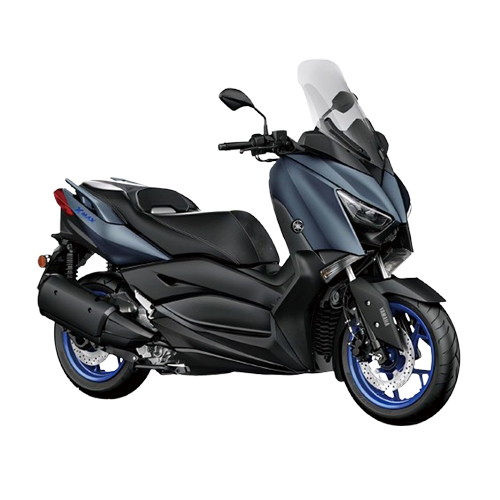
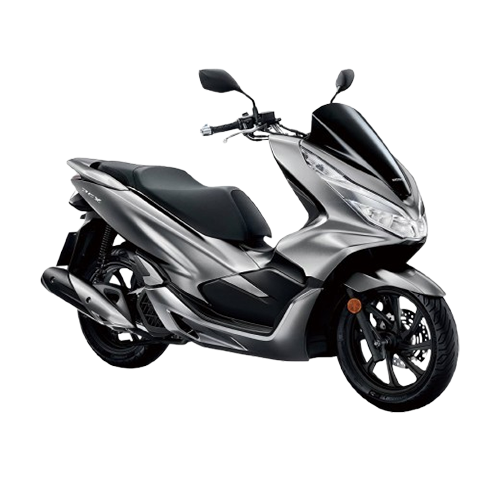
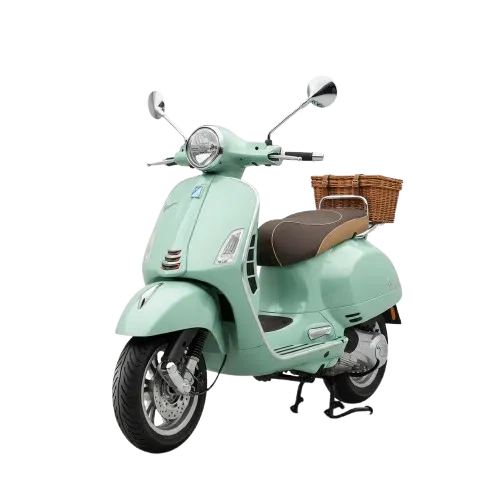
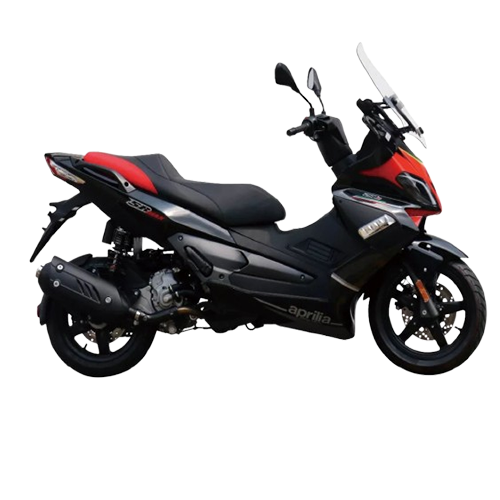
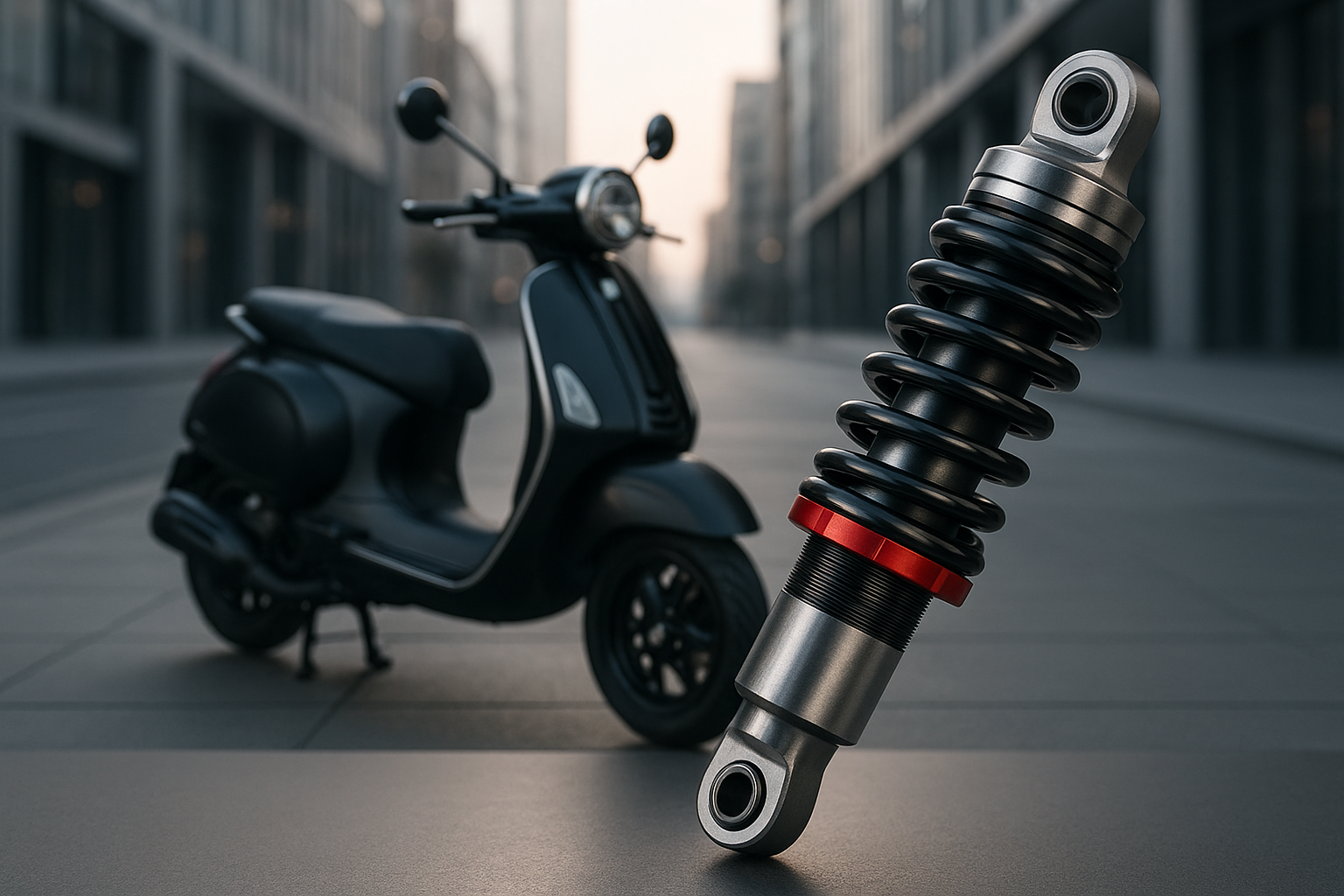
Urban scooters live a hard life.
On paper, they’re “low speed” machines. In practice, they’re asked to do everything: absorb pothole edges, glide over speed bumps, stay stable under abrupt braking, and keep a planted feel on uneven pavement—often with a passenger or cargo on the back.
For distributors and aftermarket brands, that reality creates a straightforward business problem: if the suspension upgrade doesn’t feel better immediately—or if fitment, durability, or after-sales support isn’t rock solid—you’re the one eating returns, warranty claims, and brand damage.
This buyer guide is built for decision-stage sourcing. It gives you a practical framework to evaluate Vespa shock absorbers for an urban-scooter program, assemble a SKU ladder that protects margin, and qualify a scooter shock absorber manufacturer that can support you at scale.
Needs assessment: what “city performance” actually means for a scooter shock
Before you compare suppliers, align on the job to be done. City riding amplifies a few suspension demands that don’t show up as clearly in weekend cruising.
1) Small-bump compliance without wallow
The best urban setup takes the sting out of cracks and patchwork asphalt—but doesn’t feel floaty or vague when the rider changes direction.
If damping is too light, you’ll get a loose, “wobble-prone” feel. If it’s too stiff, riders report harshness through the bars and seat (and they won’t pay for a “premium” upgrade that feels worse).
2) Controlled braking and mid-corner stability
City riding is full of short, sharp braking events. Poor damping control shows up as:
front-end dive that unsettles the chassis
instability during quick lane changes
loss of confidence on uneven turns
That’s not just comfort—it’s perceived safety, which directly affects conversion and repeat purchase.
3) Load tolerance and consistency
A single scooter model gets used in multiple real-world configurations:
rider only vs. rider + passenger
top case / delivery box
heavier rider weights
long commuting mileage cycles
This is where adjustable options (or correctly tuned “fixed” damping) become part of your product strategy: you’re not just selling a shock, you’re selling fewer edge cases.
Key Takeaway: Your “urban scooter” program should be defined by ride feel + stability outcomes and backed by fitment accuracy + validation documents. Any supplier that can’t support both is a risk—no matter how good the unit looks on a spec sheet.
The evaluation framework: 8 criteria to source the right Vespa shock absorbers (and Vespa suspension upgrade)
Decision-stage sourcing gets easier when you treat the comparison like procurement, not marketing. Use these eight criteria to score suppliers and product lines.
1) Platform coverage and fitment clarity (non-negotiable)
Start here. A shock absorber program lives or dies on fitment data quality.
Ask for:
model-year fitment tables by market (EU/US/SEA can vary)
dimensions and mounting specifications
installation notes and “known exceptions”
SKU naming conventions (clear cross-references reduce ordering errors)
Red flag: vague “fits Vespa” statements without year ranges, or a supplier who can’t provide a fitment table that your catalog team can actually use.
2) Damping strategy that matches city conditions
You don’t need to turn this into an engineering seminar—but you do need to know how the product is designed to behave.
For an urban scooter program, look for a supplier that can explain:
how they control vibration and harshness from uneven pavement
how they reduce instability during direction changes
what changes across tiers (not just cosmetic differences)
If you’re sourcing adjustable scooter shocks, validate the adjustment scope:
what does rebound adjustment change in real riding?
is compression adjustment available, and is it meaningful or just “clicks”? (If you carry adjustables, you’re also carrying the responsibility to educate workshops.)
3) Tier ladder design (Good / Better / Best)
Distributors win when the product line makes it easy to:
launch with a tight set of “core movers”
upsell customers based on a real, felt difference
protect margin with a premium tier that’s visibly premium
A good tier ladder isn’t just product segmentation—it’s your go-to-market system.
A practical structure:
Entry upgrade: reliable comfort improvement, high turnover
Adjustable performance: tuning capability and sharper stability
Premium style + comfort: flagship feel, finish, and branding opportunity
4) Validation and quality system credibility (what you can show customers)
Your dealers and workshops will ask why they should trust the part. Your team will ask why you should trust the supplier.
Procurement-ready proof typically includes:
ISO / IATF certifications
fatigue and durability testing approach
dyno validation process (how consistency is checked)
process control: CNC machining, surface treatment, anodizing consistency
You don’t need to publish the entire lab report—but you do need documentation you can use in sales enablement.
5) Consistency at scale (not just “one good sample”)
Many suppliers can produce a strong prototype. The question is whether unit #5000 behaves like unit #50.
Ask:
how consistency is verified batch-to-batch
whether each unit is validated (or sampled) and how
how serial/batch traceability works for claims
Red flag: “We test sometimes” with no defined process.
6) MOQ, lead time, and reorder reliability
A city-scooter program is a replenishment business. Your cash flow and fill rate depend on reorder predictability.
Get clarity on:
MOQ by SKU (and whether mixed assortments are possible)
typical lead time and peak-season variance
packaging lead time (if private label)
shipping terms and how delays are communicated
7) After-sales support and claim handling
After-sales is where brands earn trust—or burn it.
Minimum expectations:
documented claim process
batch traceability
responsive technical support for fitment issues
replacement policy clarity
8) OEM/ODM capability that’s actually usable
“OEM/ODM” can mean anything. For a brand/distributor program, you want practical leverage:
damping tuning options across tiers
finish options aligned with lifestyle/premium markets
private label packaging that matches your retail channel
technical drawings and sampling process that your team can run repeatedly
Common failure modes (and how to avoid them)
These are the problems that create expensive surprises after you’ve already launched.
Failure mode 1: The line is “premium” on paper, but riders don’t feel it
If the upgrade doesn’t create an obvious improvement in comfort and stability, conversion drops and returns rise.
How to prevent it: require a clear “before/after ride feel” positioning per tier, and validate with workshop feedback during sampling.
Failure mode 2: Fitment disputes become a support queue
The fastest way to lose dealer trust is a part that “almost fits” or requires improvisation.
How to prevent it: demand fitment-by-year documentation, installation notes, and a single source of truth for SKU mapping.
Failure mode 3: You can’t reorder reliably
A popular SKU out of stock doesn’t just lose sales—it sends buyers to competitor programs.
How to prevent it: set reorder SLAs early and build a starter assortment plan that emphasizes core movers.
Failure mode 4: Cosmetic variability undercuts the premium tier
If finish consistency varies across batches, premium positioning collapses.
How to prevent it: qualify anodizing/surface treatment control as a procurement requirement, not a “nice to have.”
⚠️ Warning: Treat shock absorbers like a program, not a single product. The hidden costs are rarely in unit price—they’re in fitment errors, returns, and unstable replenishment.
What a distributor-ready Vespa suspension program should include
If you’re building a line for urban scooters, you’re not just ordering parts—you’re building a repeatable offer your channel can sell.
Here’s what “complete” looks like.
A starter assortment you can launch quickly
A practical launch plan usually focuses on the highest-turnover platforms and a tight SKU count.
For Vespa-focused programs, a common starting point is:
platform coverage for high-volume commuter scooters (often centered on models like Sprint 150 and Primavera 150)
8–10 core movers, with optional finish variants once you see demand
This keeps your catalog manageable while giving your dealers real upsell options.
Sales enablement that reduces returns
Provide your channel with:
fitment tables
tier positioning (who each tier is for)
installation guidance and common FAQs
a simple “how to choose” decision tree
When your dealers can explain the why clearly, you get fewer wrong purchases.
Workshop support for tuning and troubleshooting
If you carry adjustable scooter shocks, workshops need:
adjustment guidance (what to change for comfort vs. stability)
baseline settings recommendations
troubleshooting notes for common complaints
One example supplier approach: KINGHAM’s Vespa program
To make the evaluation framework concrete, here’s how one manufacturer structures a Vespa-focused suspension offer.
Kingham Tech (often styled as KINGHAM) positions itself as a manufacturing partner for distributor and aftermarket brand programs, with a Vespa-specific overview that includes platform notes, product tiering, and validation emphasis.
Brand hub: Kingham Tech
Vespa program overview: Engineered for Iconic Urban Mobility: Suspension for Vespa
Program segmentation: Good / Better / Best
A tier ladder similar to the following is designed to match distributor economics (turnover + margin protection). It’s also where an OEM/ODM scooter suspension supplier earns their keep—because the tiers need to be meaningfully tuned, not just cosmetically different:
Essential Comfort: entry upgrade focused on daily urban reliability
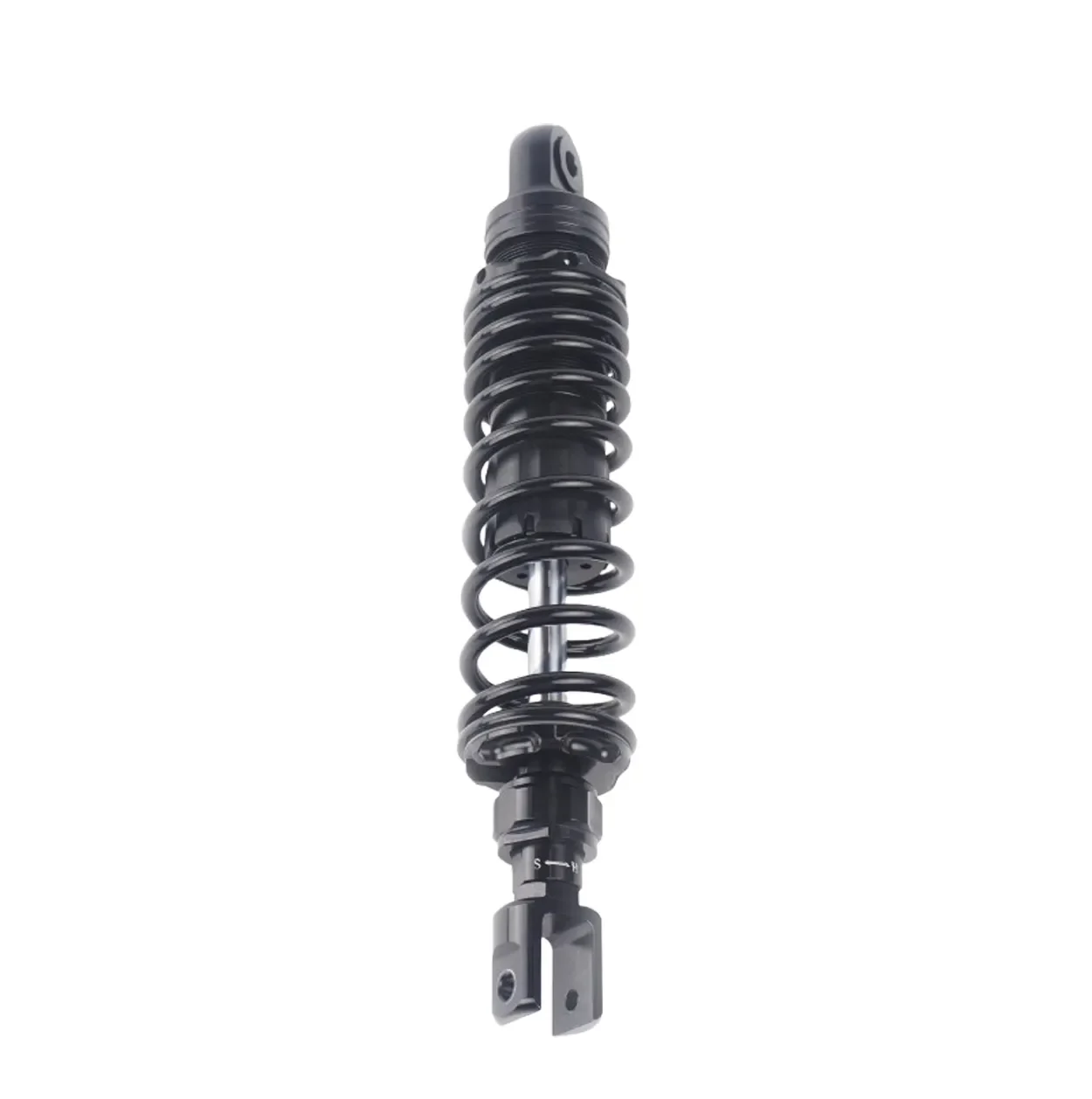
Performance Adjustable: adjustable damping options positioned for sharper stability and agile handling
Premium Style & Comfort: flagship feel + premium finish for lifestyle/premium retail channels
This kind of segmentation is useful because it gives your dealers a clear upsell story without forcing them to “oversell” riders into a single expensive SKU.
Proof signals: certifications + end-to-end process control
Kingham emphasizes procurement-relevant proof markers:
IATF 16949 and ISO 9001 certified systems
in-house CNC machining and anodizing
internal validation (including durability and damping consistency checks)
If these proof artifacts are important in your market (they often are), request the documents and test summaries as part of supplier qualification.
OEM/ODM support for brand programs
For distributors and aftermarket brands building branded lines, Kingham’s public materials highlight:
customization across performance parameters and aesthetics
private label packaging options
rapid prototyping flow (with drawings delivered on a stated timeline)
If you need to localize the program (finish preference, channel packaging, or damping target), this is where OEM/ODM capability becomes operational—not just a buzzword.
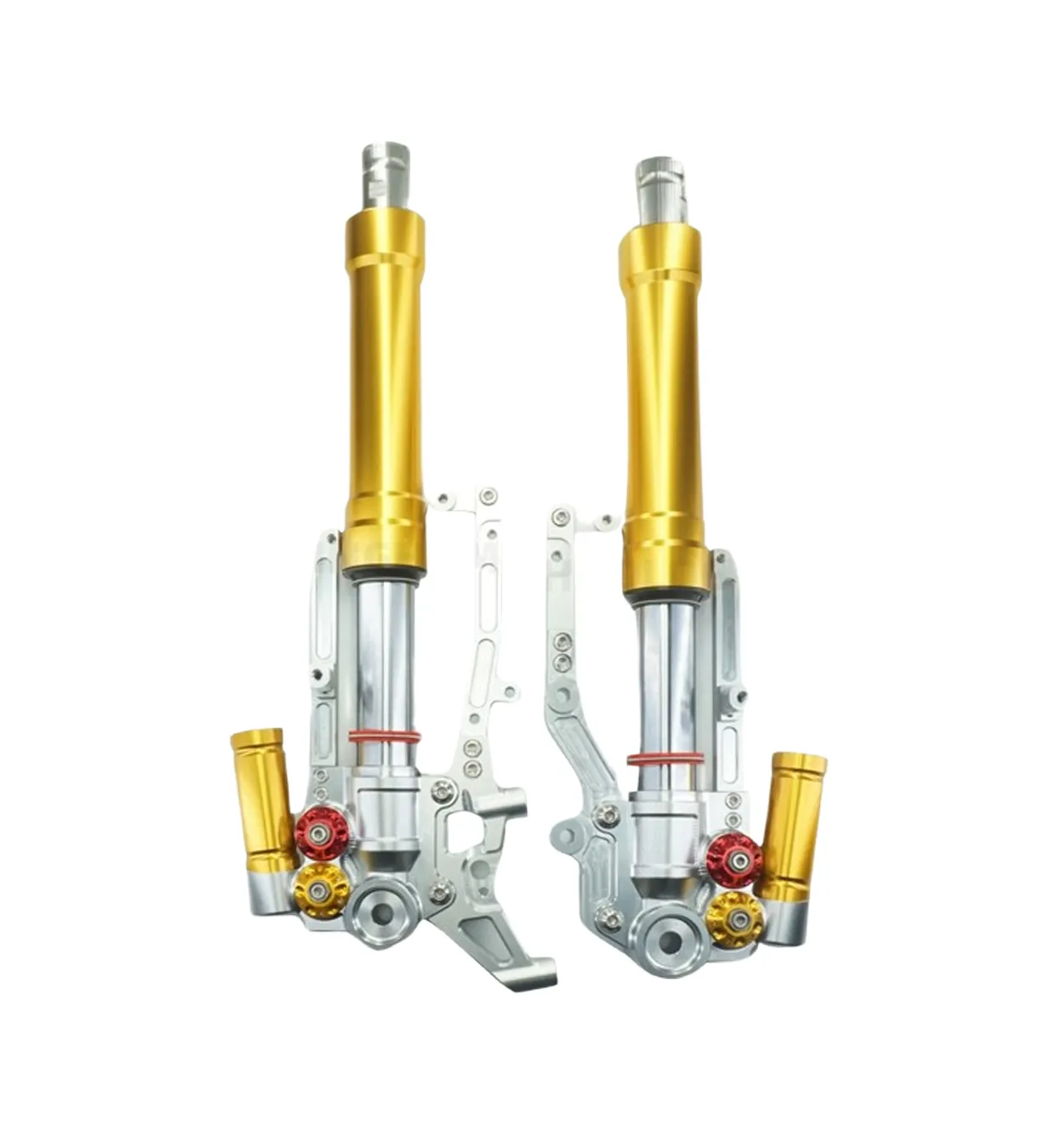
For related product categories, you can also review their category pages for rear shock absorbers and motorcycle front shock absorbers.
Due diligence checklist (use this before you place the first PO)
Use this as a quick procurement gate. If a supplier can’t answer these cleanly, don’t rationalize it.
Can they provide fitment-by-year tables and installation notes for your target markets?
Can they explain the damping strategy for city conditions (comfort vs. stability tradeoffs)?
Do they offer a tier ladder that supports both turnover and upsell?
Can they provide ISO/IATF certification and a clear validation/testing summary?
How do they ensure batch-to-batch consistency, and what traceability exists for claims?
What are the MOQ and lead time by SKU, and how stable are reorders?
What does after-sales support look like (response time, claim handling, replacement flow)?
What OEM/ODM options are real (damping tuning, finishes, packaging), and what is the sampling process?
Next steps: request a distributor-ready spec pack
If you’re building (or refreshing) a Vespa suspension line, the fastest path to a confident decision is to get the fitment table, tier ladder, and validation pack in your hands.
CTA: Request a Vespa suspension proposal with the documents you actually need to launch and replenish:
fitment-by-year table
recommended starter assortment (core movers)
tier positioning and adjustment scope
validation/testing summary
OEM/ODM options (finish, branding, packaging)
Start with the program page and then ask for the supporting pack: Vespa suspension proposal.