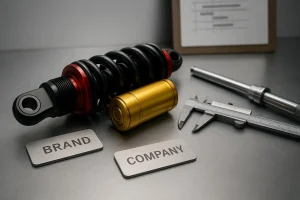
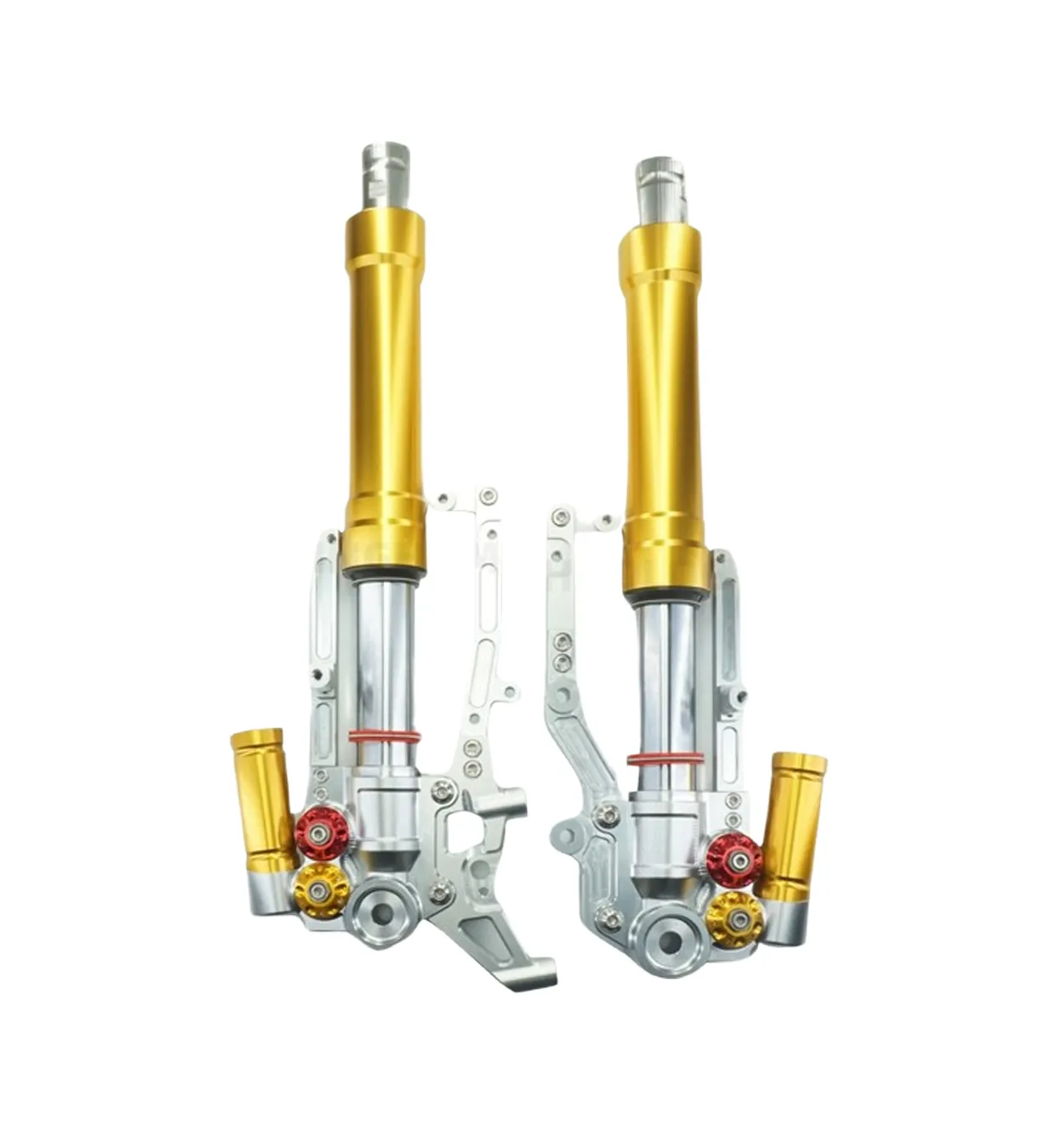
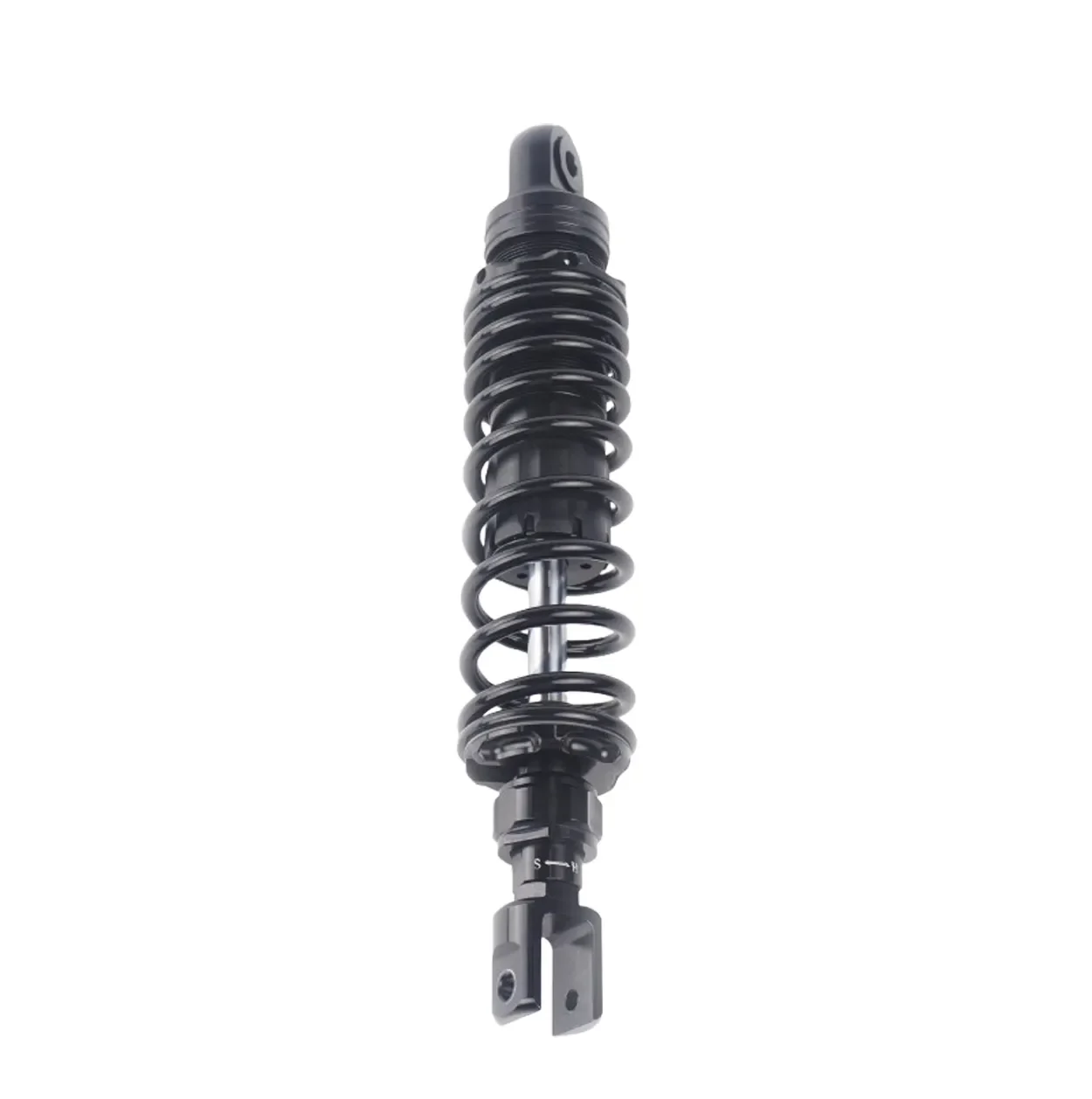





Sport/high-speed UTVs live in a brutal environment: long whoop sections, repeated G-outs, high chassis pitch rates, and abrasive sand that punishes seals and rods. If you manage product lines or run a suspension service center, building a shock program that survives this abuse takes more than “bigger is better.” It demands evidence—ATV UTV shock absorber durability and testing that proves your choices hold up at speed.
Sizing for load and travel in sport/high-speed UTVs
The job starts with geometry and weight. Motion ratio translates wheel travel and loads into spring and damping targets. High-travel platforms like Polaris RZR Pro R and Can‑Am Maverick X3 set realistic expectations for stroke and wheel movement—roughly 22–29 inches of usable wheel travel depending on model and trim, per manufacturer specs. See the Polaris RZR Pro R travel specs and the Can‑Am Maverick X3 travel specs for representative ranges.
Think of motion ratio like a lever. If your wheel moves 20 inches for 10 inches of shock stroke, the motion ratio is 2.0 at that point (it’s usually position-dependent). That ratio amplifies forces and dictates how stiff the spring must be to control chassis pitch while keeping the shock within its stroke.
Worked example (starting spring rate):
- Assumptions: 1,200 lb gross vehicle weight (GVW) with 50/50 static distribution; rear corner weight ≈ 300 lb; target wheel rate ≈ 200 lb/in for sport stability.
- Motion ratio (wheel/shock) at ride height: 1.25 (position average).
- Convert wheel rate to spring rate: spring_rate ≈ wheel_rate × (motion_ratio)^2 ≈ 200 × (1.25)^2 ≈ 200 × 1.56 ≈ 312 lb/in per rear corner.
- If using dual-rate springs, set a primary around 250–300 lb/in with a crossover to a stiffer secondary to resist deeper travel. Tune with preload and crossover height to hit ride and mid-stroke support.
This is a starting point, not a final spec. Verify against target ride height, shock stroke limits, and vehicle-specific anti-squat/anti-dive characteristics, then refine on the dyno and in field loops.
Valving strategy for speed—controlling chassis and impacts
High-speed off‑road splits into two jobs: low‑speed damping shapes chassis attitudes (pitch, roll, squat); high‑speed damping deals with sharp hits (curbs, rocks, square edges). A practical strategy is to establish a low‑speed baseline that keeps the chassis tight through sweeping turns, then raise high‑speed compression to handle whoops and ledges without harshness.
- Low‑speed compression and rebound: Target firm but not dead—enough to prevent wallow. Use clicker baselines that keep rebound slightly conservative to avoid pack‑up on whoops; adjust in small steps.
- High‑speed compression: Add ramp to absorb square edges. For desert settings, high‑speed compression often trends higher than forest/rock trails, which may prefer more compliance for traction.
- Position sensitivity: If internal bypass or position‑dependent circuits are available, increase damping late in the stroke to prevent bottoming and control chassis pitch on G‑outs.
Document clicker ranges and test loops. It helps to publish “desert baseline” vs. “forest baseline” settings and note expected symptoms if customers drift far off‑baseline (e.g., excessive pack‑up or mid‑stroke wallow). This is part of disciplined ATV UTV shock absorber durability and testing—your program should capture baselines and deviations.
Heat management and cavitation—ATV UTV shock absorber durability and testing
At sustained speed, heat generation and aeration become the enemies. The solution blends oil volume, pressure management, and material choices:
- Increase oil volume and use external reservoirs to dissipate heat and reduce fade. Lightweight aluminum bodies aid heat transfer. FOX highlights real‑time control approaches in its Live Valve literature; while adaptive systems are valuable, your program’s fundamentals are still oil volume and consistent damping profiles. See the FOX Live Valve overview for adaptive control context.
- Prevent cavitation with a monotube design that separates oil from the nitrogen gas via an internal floating piston (IFP). Specific UTV nitrogen pressures are typically supplier‑defined and vehicle‑specific; set them by spec agreement and validate in testing.
- Practical thermal guidance: Track oil temperature delta on test loops; watch for fading feel or dyno‑measured force drift after warm‑up. Public UTV‑specific temperature and PSI ranges are limited—set targets in your contracts and validate in your program instead of relying on generic numbers.
Bottoming protection and end‑of‑travel control
Repeated G‑outs and landing events demand strong end‑of‑travel strategies.
- Internal bypass and position‑sensitive damping progressively close bypass ports deeper in the stroke, ramping compression to prevent harsh bottoming. FOX’s Maverick X3 internal bypass manual explains how bypass zones add control late in travel; review the X3 internal bypass guide for maintenance and tuning context.
- Hydraulic bottoming features and more consistent pressure management can keep damping response predictable under high velocity impacts. Öhlins’ TTX documentation outlines independent compression/rebound circuits and pressure‑positive designs that resist aeration; see the Öhlins TTX technical manual.
- External bump stops (hydraulic or elastomer) add progressive resistance before full bottom. Keep inspection intervals tight in desert use; replace worn bump rubbers and verify clearances.
Sealing and corrosion resistance for sand/mud
Abrasive environments accelerate wear. Your sealing stack and surface treatments must be chosen for grit, mud, and salt exposure.
- Wipers and seals: Polyurethane‑based wipers and sealing elements offer abrasion resistance; PTFE‑reinforced compounds can lower friction; FKM elastomers provide temperature and chemical resilience. For a technical overview, see SKF’s Hydraulic Seals reference guide.
- Corrosion testing: Neutral salt spray (ASTM B117) and ISO 9227 methods define exposure protocols but do not map hours directly to field life. Use them to compare finishes/coatings and set contract acceptance criteria. See ASTM B117 standard page and ISO 9227 overview.
- Maintenance cadence: Increase seal/wiper inspections and re-greasing in dusty conditions. Dust boots help but can trap grit; clean after events.
Validation matrix—bench and field tests for high‑speed programs
Below is a practical framework to verify ATV UTV shock absorber durability and testing outcomes across lab and field stages. Adjust specifics per vehicle and supplier.
| Test Stage | Purpose | Method | Evidence/Acceptance Guidance |
|---|---|---|---|
| Bench dyno characterization | Establish baseline force–velocity curves and hysteresis | Measure compression/rebound forces across velocity bins (e.g., 0.02–1.0 m/s); record friction and breakaway | Curves match target bands; document tolerances in supplier contract |
| Thermal cycling | Detect heat fade and aeration effects | Warm shocks to target oil temps on dyno or chamber; re‑measure immediately | Post‑cycle drift bands defined by program; investigate anomalies with teardown |
| Durability/fatigue | Assess wear, leakage, and force stability over time | Multi‑hour cycling at representative stroke/velocity; periodic inspections | No leakage; force drift within agreed limits; parts pass visual/measurement checks |
| Corrosion/ingress | Validate coatings and seal stack resistance | Salt spray per ASTM/ISO; mud/water exposure; post‑test functional check | Cosmetic limits and functional pass/fail criteria set in contract |
| Field validation | Confirm performance in real desert loops and whoops | Instrumented runs logging temps and events; subjective notes; post‑loop dyno | No harsh bottoming; consistent feel; post‑loop curves within bands |
Methodological note: Industry standards for ROV/UTV exist under ANSI/ROHVA framing, but acceptance numbers are typically OEM‑defined. Use ROHVA resources for context on responsible operation. See the ROHVA tips guide (2023).
Procurement and SKU platform strategy for distributors
A strong program balances coverage with inventory simplicity.
- Platform by body size and reservoir type: 2.0‑ and 2.5‑inch bodies with piggyback or remote reservoirs often cover the majority of sport UTV needs with manageable SKUs.
- Spring families with a baseline valving: Offer three to four spring rates per fitment and keep one valving baseline per use case (desert vs. forest), plus documented clicker ranges. This reduces inventory while preserving tuning latitude.
- Require evidence from suppliers: Pre‑/post‑dyno traces at agreed velocities; thermal cycle re‑checks; corrosion exposure plans; service interval documentation; and warranty terms coupled to validated cycles.
Distributor checklist (use this to reduce risk):
- Confirm motion‑ratio‑based spring rate starting points and shock stroke compatibility.
- Obtain baseline force–velocity curves and acceptable drift bands after thermal/durability cycles.
- Verify sealing stack materials and corrosion test protocols (ASTM B117 or ISO 9227).
- Document clicker ranges for desert vs. forest baselines and publish customer guidance.
- Negotiate service intervals and warranty terms tied to validated cycles/conditions.
- Plan spring families (3–4 rates) per fitment and minimize valving variants to control SKUs.
Practical micro‑example—factory‑supported validation workflow
Disclosure: Kingham Tech is our product. In a typical OEM/ODM program, we support rapid prototyping and structured validation without hype. A distributor defines target travel and damping feel for a high‑speed desert use case. The factory delivers CAD drawings and first‑article shocks, then runs bench dyno characterization and thermal cycling. Field loops follow with temperature logging. Results are documented against agreed drift bands and service interval targets; coatings are screened via salt‑spray exposure before scale‑up. For readers wanting to see a neutral overview of partner capabilities, the OEM/ODM partner program and the factory tour of end‑to‑end manufacturing pages provide context on collaboration and production evidence.
Maintenance intervals—racing vs. recreational
Racing punishes shocks; service intervals must reflect that reality. FOX advises rebuilds every 10–20 hours for racing on its Maverick X3 internal bypass shocks; recreational guidance trends toward annual or ~200 hours depending on usage. See the **[FOX X3 internal bypass manual](https://pvg-portal.ridefox.com/_context/fox/__uploads/_assets/605-00-238%20rev%20A%20.pdf)**. Öhlins’ TTX references suggest racing service around every 10 hours (up to 20 hours max between service on some models), with trail off‑road at ~50 hours annually; public road contexts are much longer. See the Öhlins TTX technical manual.
Service guidance is program‑ and vehicle‑specific. Use these ranges as starting points and set contract‑backed intervals aligned to your validation matrix.
Closing: next steps
If you’re building a high‑speed shock program, document geometry, define baselines, and validate on the dyno and in the desert before you scale. For OEM collaboration details, see our OEM/ODM partner program.