


At 75+ mph, some motorcycles develop high-speed instability that shows up as light bars, a rear end that feels like it’s “walking,” or a bike that won’t hold a clean line under load. Engineers, platform owners, and professional suspension service teams often chase one component at a time (a new tire, a stiffer steering damper, a different shock) and get mixed results.
On the road, these symptoms usually show up as high-speed wobble (front-end oscillation) or weave (rear-led lateral instability)—and the fix order depends on which mode you’re dealing with.
High-speed instability isn’t a single-component failure—it’s a system behavior defined by suspension damping, chassis geometry, tires, and how the bike is loaded.
The reason is simple: when any of those variables push the platform past its stability margin, the bike can fall into a wobble or weave mode instead of letting disturbances die out.
What high-speed instability feels like in real riding
Most field reports fall into two distinct modes.
Motorcycle speed wobble (front-end oscillation)
A rapid steering oscillation that starts from a disturbance (bump, groove, imbalance) and can escalate quickly if the system can’t dissipate energy. It reads as a fast, contained back-and-forth of the bars, distinct from the slower, whole-bike motion of weave.
Motorcycle weave (rear-led lateral instability)
A slower, whole-bike “snaking” motion where the rear end feels like it’s steering the motorcycle. It builds gradually rather than snapping, and under load the bike tends to drift into a widening line as the rear catches back up with the front. It often correlates with luggage, passenger load, aero add-ons, and rear suspension behavior.
Rider Magazine distinguishes weave (~3–4 cycles per second) from wobble (~6–10 cycles per second) and links both to maintenance, loading, and suspension condition.
Classify the mode first. Wobble and weave don’t share the same root causes—or the same fix order.
Why high-speed motorcycle instability is a system-level problem
A motorcycle stays stable at speed when disturbances decay fast enough. That decay rate is influenced by:
- Tire contact patch behavior (grip, damping, deformation with heat)
- Suspension damping (how quickly energy is absorbed vs returned)
- Geometry and structure (trail/rake, stiffness, mass distribution)
- Operating envelope (speed band, load, temperature, road input)
This is why swapping a single component can “move the problem” instead of solving it: you changed the threshold, not the system dynamics.
For a production model, an aftermarket upgrade, or a new platform, this distinction carries real weight: a suspension change can never be judged in isolation, because it operates within rider load, vehicle mass, geometry, and tire specification.
For platform teams, the right question isn’t “what part fixes wobble?” It’s “what requirements keep the platform stable across load and temperature?”
Tire and mechanical conditions that commonly trigger instability
Before tuning, control the preconditions—otherwise you’ll misdiagnose the system.
Tire deformation under heat and sustained speed
Heat changes carcass compliance and can reduce the stability margin on platforms that are already near a mode threshold: as the carcass warms, the front contact patch turns less crisp, subtly shifting effective trail and eroding the remaining margin.
Incorrect pressure or uneven wear
Pressure shifts contact patch shape and damping. Uneven wear (cupping/flat-spotting) can add periodic excitation that feels like a chassis problem.
Wheel imbalance, bearing play, and looseness
Imbalance forces grow roughly with the square of wheel speed, so a defect that is barely noticeable at 40 mph can build into a real shake by highway speed. Steering-head bearing play, wheel bearing play, and swingarm pivot looseness are repeatedly flagged in real wobble/weave cases (see Rider Magazine’s 2009 overview referenced above).
Evaluation move: define a baseline mechanical checklist (tires/pressure, balance, bearing play, alignment) as an entry gate before any damping conclusions.
Suspension damping mismatch is the core stability mechanism
Once preconditions are under control, instability typically comes down to how the suspension manages oscillation energy—especially when hot or loaded.
Damping is energy control, not comfort tuning
Springs set support; damping controls motion. At highway speeds, you care about whether disturbances decay (stable) or repeat (unstable).
Rebound vs compression imbalance
High-speed instability is often a shape problem in the damping curve:
- Too little rebound control can let the wheel extend and re-load too aggressively after a disturbance, feeding oscillation.
- Too much rebound can cause packing over repeated inputs (effective ride-height loss), shifting geometry and increasing weave tendency.
- Too-soft high-speed compression can blow through travel on sharp inputs, handing a spike into the chassis/steering.
That’s why “just stiffen the shock” is unreliable. Stability requires balanced control across the shaft-velocity regions the bike actually sees at speed.
Why weak or mismatched damping amplifies instability
When damping is wrong in the operating band, you often see:
- instability that appears only after 20–40 minutes (temperature sensitivity)
- instability that appears only when loaded (ride-height shift + higher energy input)
- instability that appears only in a narrow speed range (mode threshold)
Evaluation move (engineering): require stability targets under real load and heat-soak—not only a short, cool test ride.
Steering geometry and steering damper influence
Damping is the main energy lever, but geometry sets the stability margin.
Steering geometry: trail and rake
Trail is the distance between the steering axis ground intersection and the front tire contact patch. More trail generally improves self-centering stability; less trail generally increases agility but can reduce high-speed margin. The mechanism is that the front contact patch sits behind the steering axis, so any yaw generates a restoring force that pulls the bars back toward straight—which is why deeper trail reads as a stronger, steadier pull at the bars.
For definitions and the stability tradeoff, see Cycle World’s “Understanding a Motorcycle’s Rake and Trail” (2015) and Motorcycle Mojo’s chassis geometry overview (2014).
When steering dampers are critical
A steering damper can reduce high-frequency steering oscillation (wobble). It generally has less effect on a rear-led weave. If a platform needs a damper to survive a normal operating envelope, treat it as a countermeasure—not the root fix.
The engineering takeaway is that you don’t “fix weave or wobble” with a single part—you prevent it by translating the stability margin into platform requirements and validation gates.
Why OEM/ODM suspension tuning determines real-world stability
If stability is a system margin—not a part swap—then OEM/ODM tuning has to define requirements and validation gates that hold across payload, temperature, and speed.
For multi-model platforms, the same nominal hardware can behave differently because the system is different: geometry, stiffness, aero sensitivity, mass distribution, and typical payload.
This is where suspension damping tuning becomes an engineering requirement, not a workshop preference.
Platform-specific damping curve design requirements
A credible OEM/ODM program should define:
- target operating envelope (speed/load/temperature)
- damping curve targets by region (not only “soft/firm”)
- ride-height/geometry targets under load
- validation gates and acceptance criteria (decay behavior, repeatability)
This is the framework we build into every OEM/ODM program we scope—a scale-ready engineering approach rather than a looser set of tuning preferences.
How suspension system design solves high-speed instability
Use this order-of-operations to keep diagnosis and engineering decisions clean:
- Stabilize preconditions: tire spec/pressure, wheel balance, bearing play, alignment.
- Engineer decay: tune damping so disturbances die out quickly across the real high-speed operating band (including heat-soak and payload).
- Protect geometry under load: ensure the platform doesn’t shift into an unstable trail/rake zone when loaded.
- Balance comfort and control explicitly: over-damping can reduce grip and rider confidence; stability isn’t “max damping.”
When suspension or steering components should be upgraded
Consider an upgrade or a platform-level retune when you see:
- persistent wobble or weave at highway speed after mechanical checks
- stability that degrades when hot or under load
- a usage change (luggage system, passenger use, tire spec change) that shifts the platform’s operating envelope
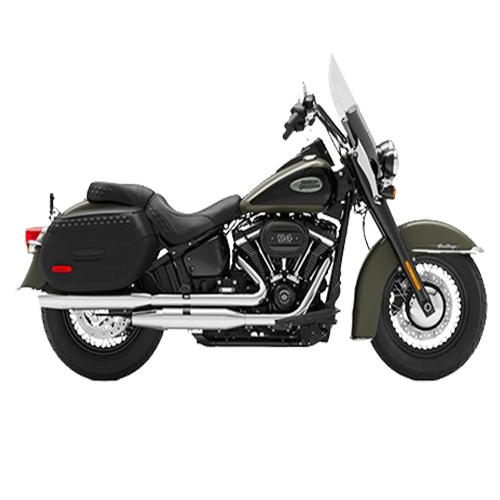
This pattern shows up across many platforms—including Honda commuter platforms after long highway stints, and Harley touring bikes under sustained load—as a signal that damping is mismatched to the real operating envelope, not a platform-specific defect.
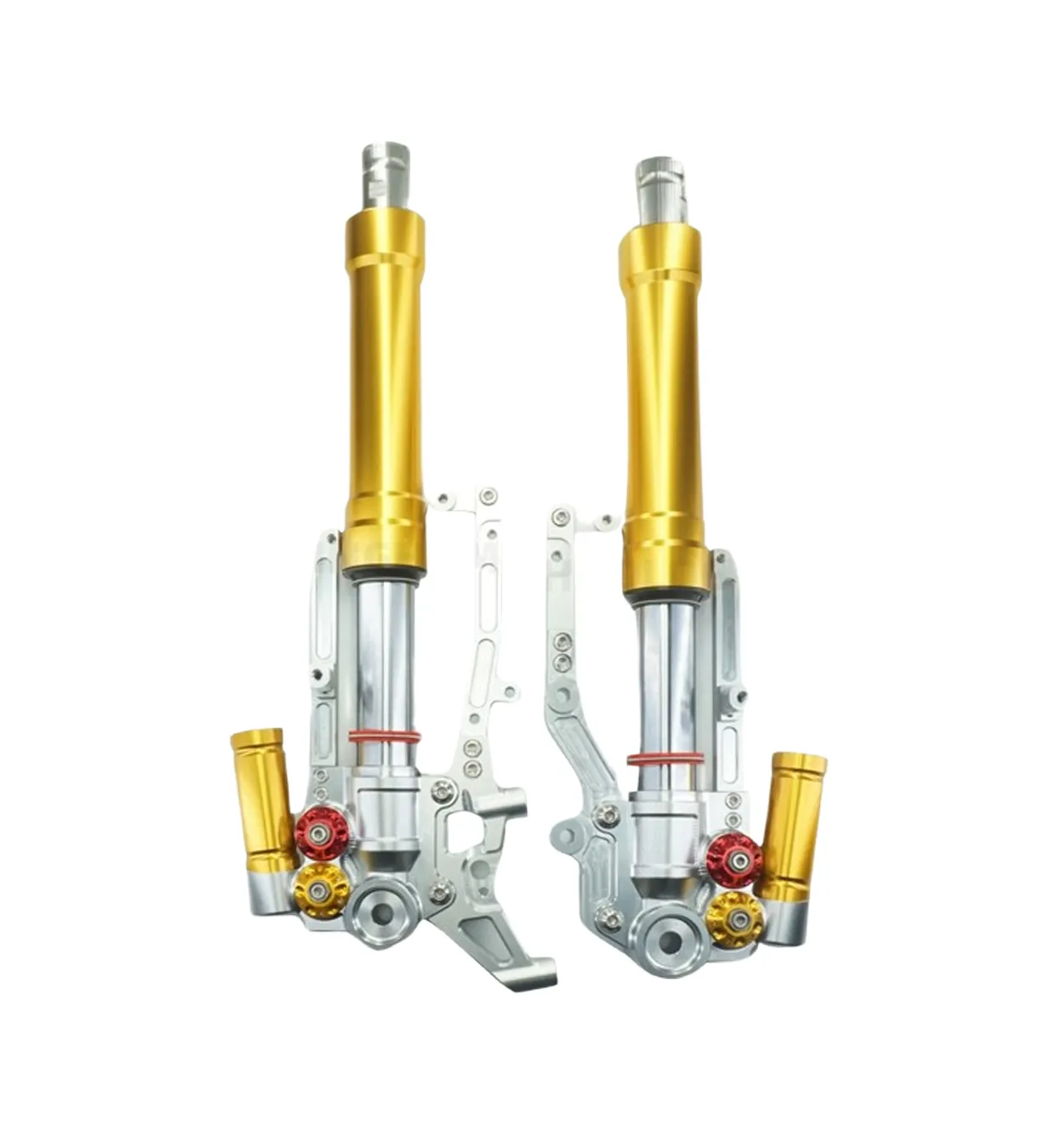
For platforms where front-end response is part of the evaluation, Kingham’s front shock absorber range is a relevant starting point for reviewing available hardware options alongside steering geometry and damping requirements.
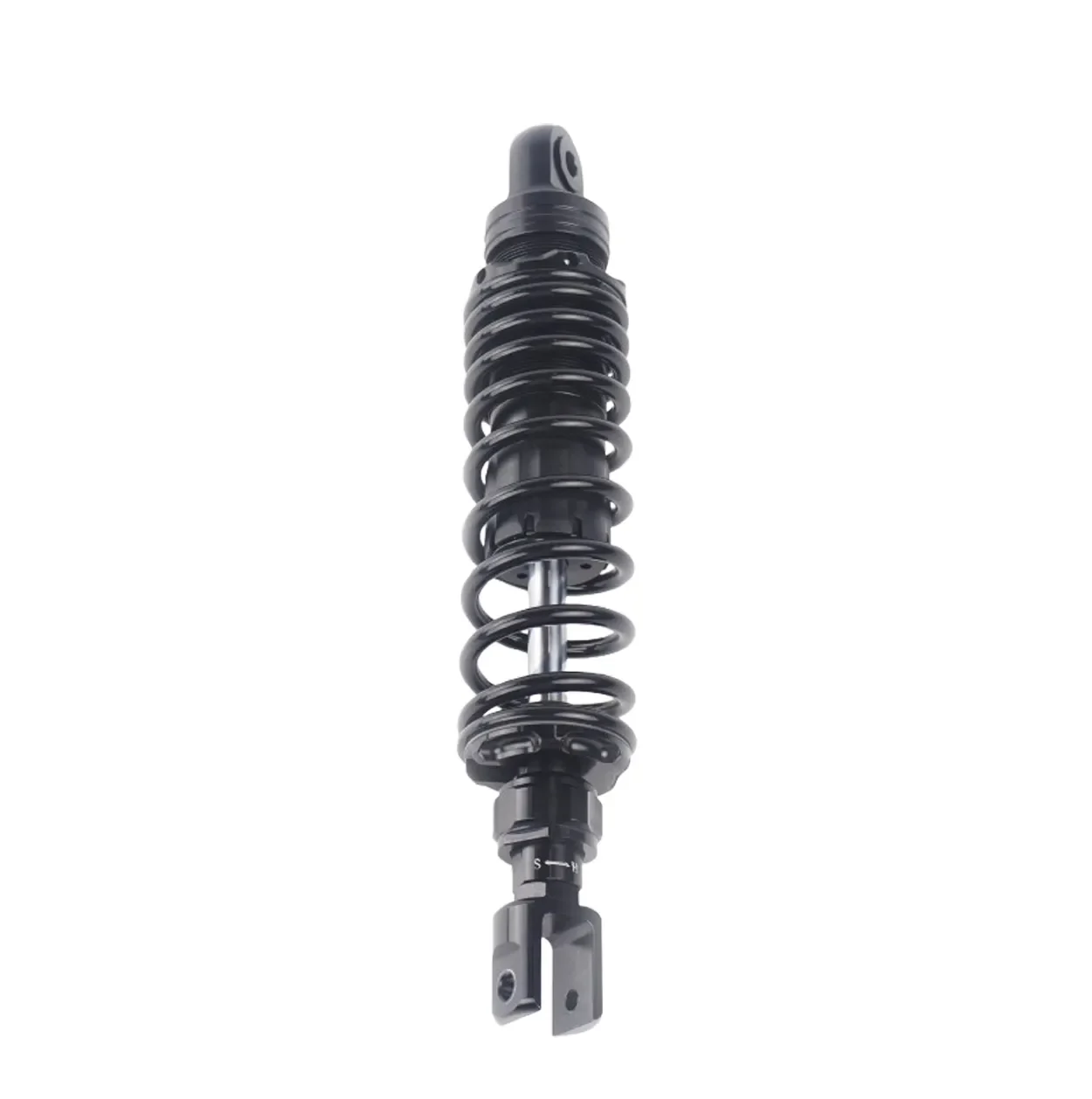
If you’re scoping configurable hardware categories, start from the rear shock absorber and front shock absorber options that match your platform—then tie the selection back to a validation plan.
Stability is system engineering, not part swapping
High-speed motorcycle instability is a system-level outcome. The most reliable fix path is to control preconditions, treat damping mismatch as the core energy-control variable, and validate the platform across real load and temperature.
You can tell the setup is engineered rather than merely tuned when it clears the same acceptance gate on repeat: disturbances decay quickly across heat-soak and full payload in the target speed band, no wobble or weave mode appears at the edge of the envelope, and the rear holds a stable ride height under load. If contact-patch grip drops or rider confidence fades, you have over-damped—pull damping back until control and compliance balance. That tested repeatability is the exit criterion: pass it consistently and the platform stops depending on ideal conditions just to feel stable.
When you can pass that gate consistently, stability stops being “a setup that works until conditions change”—it becomes a platform requirement you can ship and support.
Put suspension engineering capability to work
Naming the problem is one thing; building a platform that stays stable across load, heat, and speed is another. If you are a distributor, aftermarket brand, or OEM and you want stability treated as an engineering requirement—defined damping curves, ride-height targets, and validation gates—rather than a parts-swap guess, start the conversation with an engineering-first partner.
View Suspension Engineering Capabilities to scope configurable performance suspension for your program.
Frequently asked questions
What is the difference between wobble and weave?
Wobble is a faster, front-end steering oscillation (roughly 6–10 cycles per second). Weave is a slower, whole-bike “snaking” motion (roughly 3–4 cycles per second) that often follows rear loading. The two have different root causes, so they call for a different fix order—classify the mode before you change anything.
What causes death wobble on a motorcycle at highway speed?
Death wobble is a violent, growing front-end oscillation usually kicked off by a disturbance (a bump, a groove, or an imbalance) when the steering system cannot dissipate the energy fast enough. Common contributors include tire deformation under heat, incorrect pressure or uneven wear, wheel imbalance, and steering-head or bearing play. Check those preconditions first, then look at whether damping is returning energy to the system instead of absorbing it.
Can a steering damper fix weave?
A steering damper primarily damps the faster, steering-led motion (wobble). It has less effect on a slower, rear-led weave. It can be a useful countermeasure for front-end oscillation, but if a platform needs a damper just to survive a normal operating envelope, treat it as a countermeasure rather than the root fix.
Does luggage or passenger load cause motorcycle weave?
Extra load changes ride height and shifts the stability margin, which is why weave often shows up on a loaded bike or two-up. Carrying luggage or a passenger raises the energy input and can push the bike into a weave mode if rear damping and geometry are not matched to that load. It is a system response, not a defect specific to any single model.
This article is general engineering guidance, not a substitute for OEM service manuals, torque specs, or professional inspection. Always follow the motorcycle manufacturer’s setup limits and verify critical fasteners/bearings before any high-speed test. If you’re validating changes, do it in a controlled environment with qualified technicians and appropriate safety procedures.