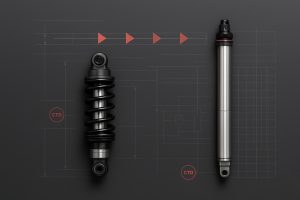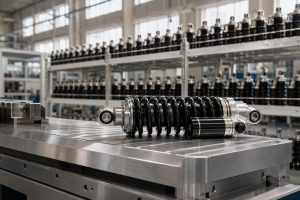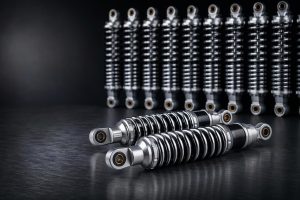
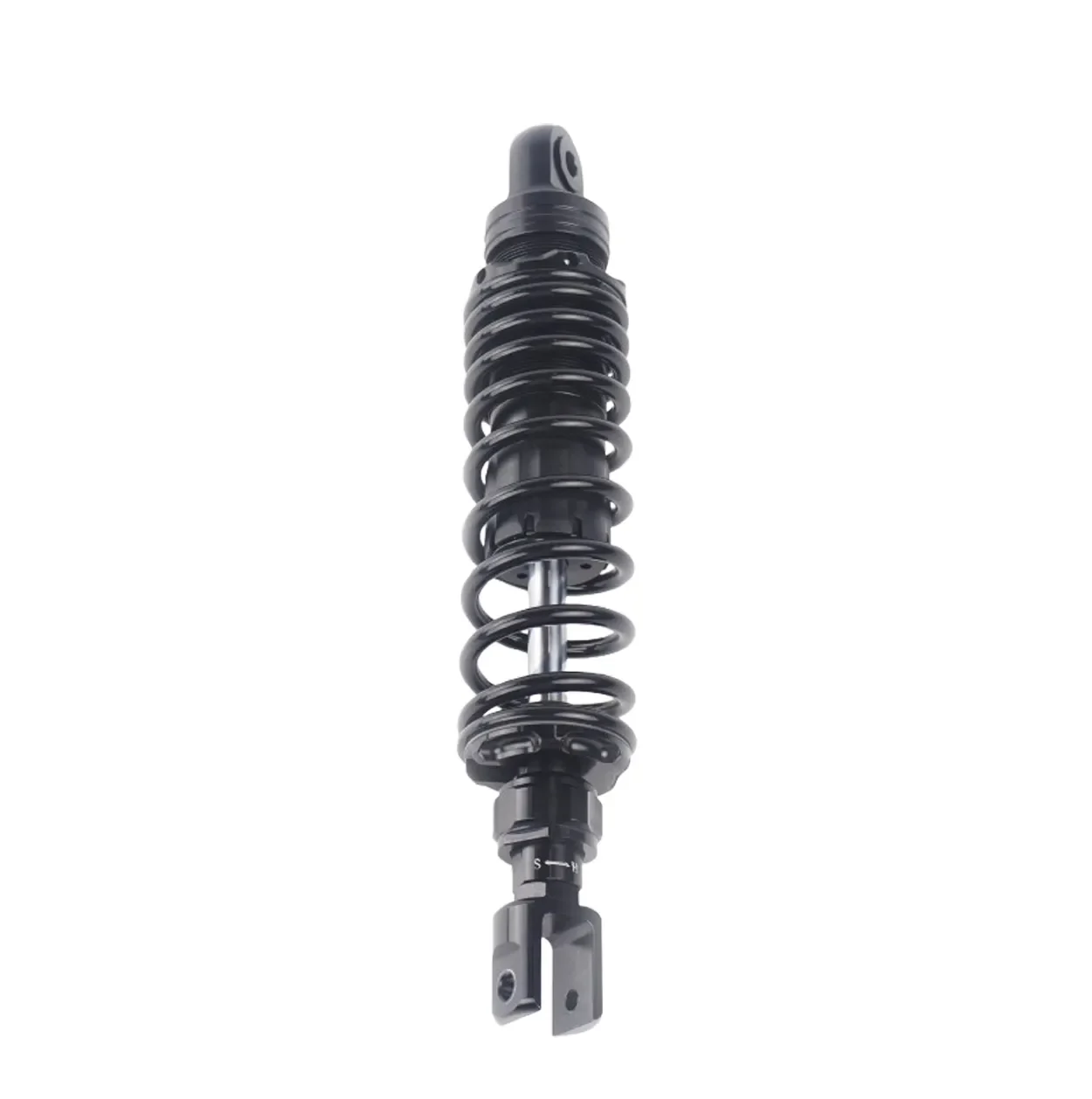


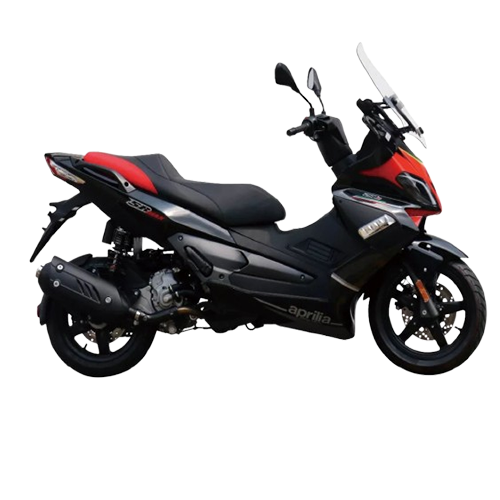

If you manage products for a regional distributor or an aftermarket brand, you already know the hardest part of building a winning shock program isn’t picking spring colors—it’s aligning engineering reality with SKU plans, validation data, and dependable lead times. This best-practice guide shows how to specify and source custom motorcycle shock absorbers for Harley-Davidson touring/bagger and Aprilia sport platforms through OEM/ODM development, backed by dyno and track validation and underpinned by automotive-grade quality systems.
What End-to-End OEM/ODM Really Means for Distributors
End-to-end OEM/ODM isn’t just “custom valving.” It’s a co-development workflow that covers fitment, performance, appearance, documentation, and repeatability. A practical program should include:
- Engineering deliverables: CAD with mounting interfaces and tolerance callouts; installation envelopes for saddlebags, exhaust, and linkages; and an initial spec sheet with damping windows to hit on the dyno.
- Appearance and branding: hard-anodized finishes with documented color stability, laser-etched logos, and retail-ready packaging. Specify color targets and acceptable ΔE/tolerance where applicable.
- Prototype cadence: clear gates from CAD sign-off to first-article, through dyno verification and on-bike evaluation; an agreed feedback loop for click mapping and shim-stack edits.
Below is a compact view of how platform needs drive structural choices.
| Platform goal | Typical configuration | Packaging notes |
|---|---|---|
| Harley touring comfort & load support | Twin shocks, optional remote reservoirs | Clearance for bags and fender; route hoses away from heat |
| Harley bagger performance & braking stability | Twin shocks with firmer base valving; optional piggyback | Watch chain/belt guard and bag mount interference |
| Aprilia track high-frequency control | Mono-shock with piggyback or remote reservoir | Prioritize reservoir volume and access to adjusters |
| Aprilia endurance thermal consistency | Mono-shock with larger reservoir and robust seals | Favor oil volume, serviceability, and thermal path |
Valving and Adjustable Ranges that Sell—and Work
For heavyweight Harley-Davidson touring, prioritize comfort and composure under two-up plus luggage loads. That typically means a softer base at low shaft speeds (to filter long-wave bumps) with a generous mid-speed range, plus rebound authority to prevent wallow once the spring is up in the stroke. For “bagger performance,” raise low-/mid-speed compression support to control brake dive and initial turn-in, and set rebound high enough to stop pogo without packing the rear over ripples.
For Aprilia track and endurance use, the goal shifts to precise high-frequency control and heat stability. Use independent compression and rebound adjusters with well-defined click-to-force deltas. In the stack, consider a firm high-speed clamp with a controlled bleed to keep compliance on curbs while maintaining chassis pitch control under hard braking. A nitrogen-charged reservoir with a floating piston helps keep oil and gas separated to resist cavitation under repeated hits, while higher oil volume and efficient flow paths reduce thermal fade. Click maps should be documented for baseline, sprint, and endurance trim.
Across both brands, make the adjusters meaningful: buyers and tuners need a repeatable relationship between a click and the force change at representative velocities. Provide acceptance windows (e.g., ±X N at Y mm/s) so every production unit can be verified on a shock dyno before shipment.
Dyno & Track Validation for custom motorcycle shock absorbers Harley-Davidson Aprilia OEM ODM
Validation is the bridge between spec sheets and confident purchasing. A robust, auditable process generally includes:
- Temperature control and stabilization: Pre-condition the shock to a test temperature and document cold vs. hot curves to quantify fade.
- Velocity nodes and sweep methods: Step or continuous sweeps that cover low-, mid-, and high-speed regimes. Publish force–velocity curves for compression and rebound, plus hysteresis.
- Repeatability windows: Define acceptance bands for multiple runs to ensure production consistency and flag anomalies.
- Track correlation: For Harley touring, define a two-up + luggage load case and measure ride height/sag, brake-dive events, and comfort over representative road segments. For Aprilia track, log curb strike frequency, braking g events, and lap segment deltas to tune high-frequency damping.
For quality frameworks and terminology alignment, see the official overviews of IATF 16949 at the International Automotive Task Force site in 2016/2017 updates and beyond, and ISO 9001:2015 from the International Organization for Standardization:
- According to the International Automotive Task Force, IATF 16949 integrates automotive-specific quality requirements with ISO 9001 to improve consistency and traceability. See the IATF’s official portal: International Automotive Task Force — IATF 16949 overview.
- ISO describes ISO 9001:2015 as the international standard for quality management systems, emphasizing process control and continual improvement. See the standard page: ISO 9001:2015 — Quality management systems.
Four Use-Case Micro-Examples
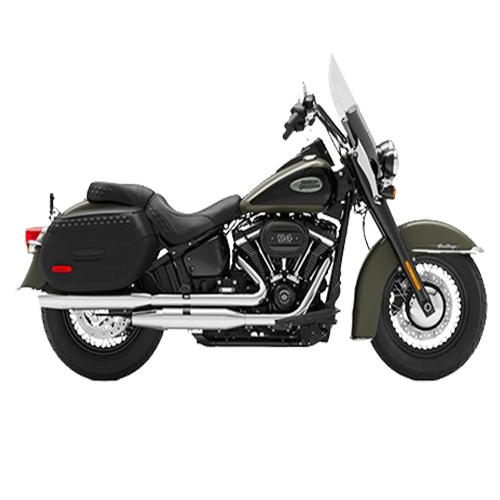
Harley Touring — Two-up + Luggage Comfort and Heat Stability
Objective: Maintain ride height and comfort on long stints with two riders and luggage while keeping damping consistent as temperatures rise.
For distributors sourcing shocks for heavyweight touring applications, Kingham’s rear shock absorber range is a relevant starting point for evaluating product options against load and damping requirements.
Practical setup: Choose springs for the combined mass with enough preload range to hit target sag in both solo and two-up conditions. Start with a compliant low-speed base to smooth expansion joints and a mid-speed stack that avoids wallow when the load transfers. Add a reservoir (remote or piggyback) to increase oil volume for thermal stability, and document nitrogen pressure and adjuster baselines.
Validation plan: Run cold and hot dyno curves (e.g., ambient vs. stabilized operating temp after a 20–30 minute road loop) and track force drift vs. temperature. On-bike, record ride height, brake-dive angle, and a comfort index using a fixed route. Use acceptance bands so production units match the prototype’s damping window.
Example in practice: A supplier with in-house prototyping and dyno verification can close loops quickly. For instance, the workflow described in Kingham Tech’s OEM/ODM development overview demonstrates how CAD-to-prototype to dyno checkpoints shorten the path to a sign-offable comfort tune for heavyweight touring. See the process outline in Kingham Tech — Motorcycle Suspension OEM/ODM Development.
Harley “Bagger Performance” — Braking/Entry Stability and Rebound Control
Objective: Improve stability during hard braking and corner entry while preserving mid-corner compliance.
Practical setup: Increase low-/mid-speed compression to support chassis pitch under heavy front brake loads; tune high-speed compression to keep bumps from spiking. Set rebound to arrest extension snapback so the rear neither pogo-sticks nor packs over successive hits. Map adjuster clicks to predictable force steps and document recommended settings for stock vs. upgraded tires/brakes.
Validation plan: On a representative route or test track, collect braking g and pitch rate data across repeated stops, then correlate to dyno force–velocity curves. Acceptance should specify both subjective rider feedback and objective thresholds (e.g., max pitch rate and recovery time).
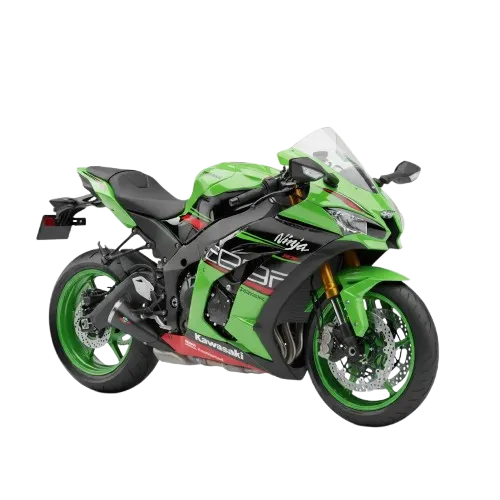
Aprilia Track-Day/Club Racing — High-Frequency Control and Anti-Cavitation
Objective: Deliver crisp response over curbs and chatter without sacrificing braking stability.
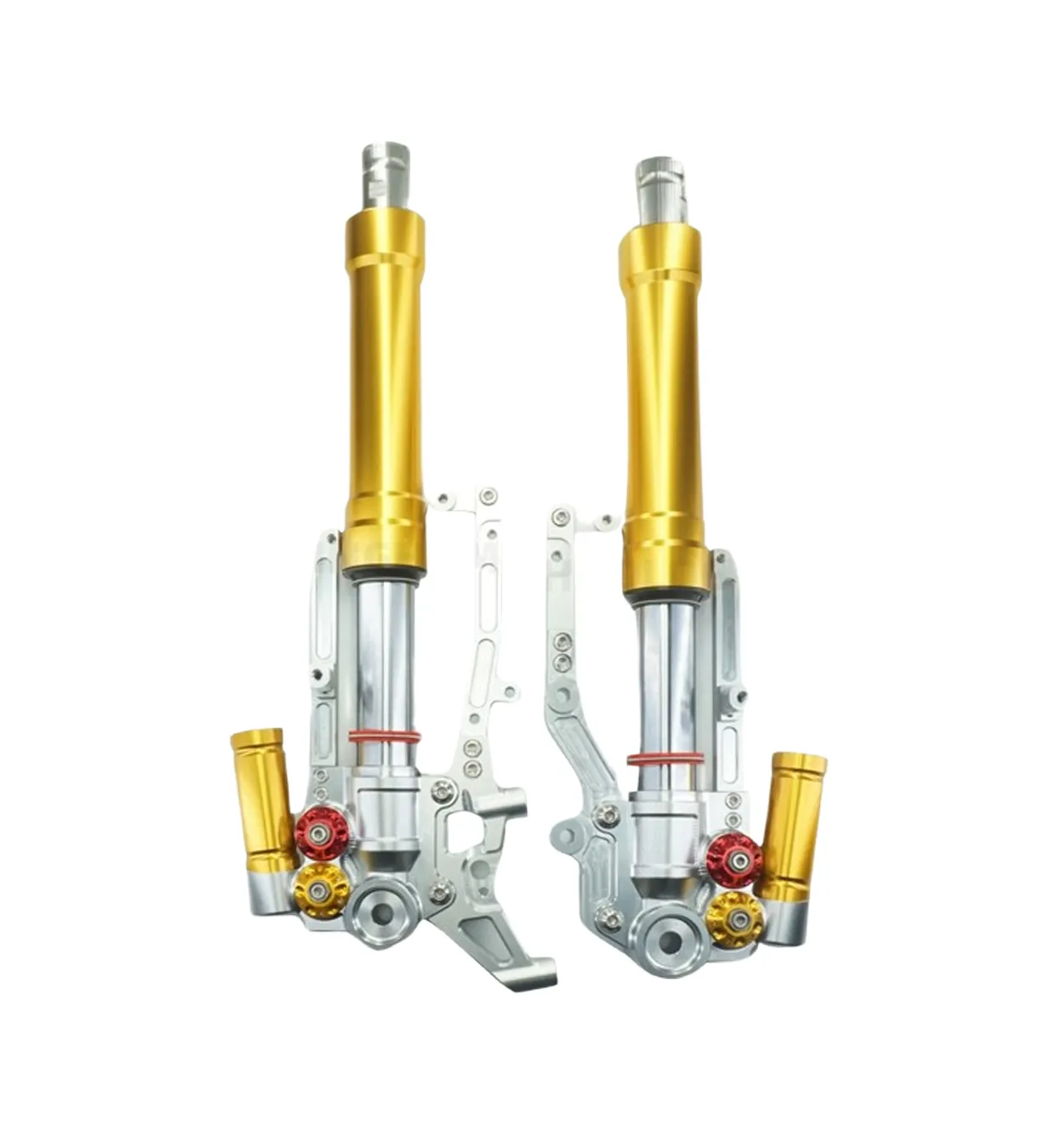
Front-end response also matters when evaluating a track-focused suspension setup. Buyers reviewing the overall configuration can explore Kingham’s front shock absorber range alongside rear shock tuning and validation requirements.
Practical setup: Use a stiffer baseline with precise high-speed control, and manage oil aeration with a nitrogen reservoir and a floating piston. Keep bleed circuits balanced to retain sensitivity at initial movement. Specify seals and oils rated for the elevated temperature range seen in repeated short stints, and ensure adjusters have fine, linear response.
Validation plan: Combine shock-dyno sweeps at multiple temperatures with telemetry from a short, high-frequency segment (curb transitions and chicanes). Look for stable hysteresis loops and minimal force drift across a hot-fade sequence.
Example in practice: Track-focused brands benefit from fast iteration. A supplier operating in-house dyno and track feedback loops—such as the approach outlined on Kingham Tech’s Harley-Davidson performance shocks page—can document click maps and anti-cavitation strategies before a dealer demo or club race weekend. Use the supplier’s lab to confirm stability at temperature before committing to a stocking run.
Aprilia Endurance — Thermal Fade and Damping Consistency
Objective: Minimize force drift over race-duration stints and maintain consistent chassis behavior as the shock heats.
Practical setup: Prioritize oil volume and reservoir size, efficient flow paths through the piston/ports, and oil/seal selections with strong high-temp characteristics. Define acceptable force drift between cold and hot states and across time-at-temperature. Favor designs that are easy to service between events.
Validation plan: Execute a controlled hot-fade protocol: stabilize to a test temperature, run repeated sweeps at representative velocities, and document the force shift over time. Correlate with a long session on track or dyno endurance rig; production acceptance should mirror the prototype’s fade envelope.
Quality Systems, Lead Times, and Repeatability
Distributors and brands aren’t just choosing a tune—they’re buying process control. Automotive-aligned systems reduce returns and warranty noise.
- IATF 16949 & ISO 9001: IATF 16949 layers automotive-specific requirements (traceability, defect prevention, and risk-based thinking) on top of ISO 9001’s process-driven quality management. Expect serialized traceability for critical components, incoming/in-process/final inspections, and documented corrective action loops. See the standard overviews from the International Automotive Task Force and ISO 9001:2015.
- APQP/PPAP alignment: For new or revised SKUs, request APQP-style milestones and a PPAP-lite submission (design records, control plan, MSA where relevant, and first-article dyno results). This reduces ambiguity and clarifies acceptance.
- Prototyping & MOQs: Agree on a rapid prototype loop with clear gate criteria (e.g., issue CAD; T0 proto in ~10 working days; dyno acceptance to window; on-bike sign-off; T1 geometry/finish check). Define MOQs and lead-time bands so your SKU plan is realistic.
Your Working Artifacts
Use these three artifacts to speed up supplier alignment and internal sign-off. Feel free to copy and adapt.
- RFQ checklist (for distributors/brands)
- Vehicle platform and load cases (solo, two-up + luggage)
- Mounting interfaces and packaging constraints
- Desired adjustability and ranges (preload, rebound, compression)
- Target damping windows and dyno acceptance criteria
- Reservoir configuration and nitrogen pressure targets
- Appearance/branding specs (anodize color and tolerance, engraving)
- Quality requirements (IATF 16949/ISO 9001, APQP/PPAP level)
- Prototype timeline, MOQ, lead time, serviceability
- Dyno-report acceptance template
- Test temperature(s) and stabilization method
- Velocity nodes and sweep description; repetitions and averaging
- Force–velocity curves (compression/rebound) and hysteresis
- Hot-fade sequence with time/temperature stamps
- Acceptance windows for repeatability and drift
- Prototype evaluation checklist
- Installation fitment and ride height (sag targets)
- Static/dynamic tests (brake-dive control, mid-corner stability)
- Adjuster sensitivity mapping (click-to-delta-force)
- Endurance/hot-fade results vs. thresholds
- Visual inspection (anodize quality), leak check, noise
Putting It Together—A Practical Sourcing Path
Start by scoping the platform goals and load cases, then lock the interfaces with CAD and a first-pass spec sheet. Insist on a dyno acceptance window and publishable curves so production can be audited before shipment. Iterate on click maps using a short, repeatable road or track loop, then run a hot-fade protocol to confirm stability at temperature. Once the prototype meets the window, freeze settings and agree on MOQs, lead times, and a control plan. If you need a concrete starting point, request a neutral technical datasheet or a prototype quote from a supplier experienced in OEM/ODM co-development—for example, you can review process details on Kingham Tech’s development overview and share your platform constraints to scope a pilot run.
Safety and SME note: Suspension tuning affects vehicle handling and safety. Treat the settings and procedures above as professional guidelines; verify with qualified engineers and conduct controlled validation before broad deployment.