








Transitioning from IQC to process capability is important for good quality management. You must know how this change improves product reliability. The Process Capability Index (Cpk) is key in this change. By looking at Cpk values, you can see how well your processes work. For example, a Cpk value over 1.33 shows a good process with fewer defects. Values below 1.0 may mean there are problems.
Using different testing methods also helps your quality assurance. Statistical process control keeps things consistent and reliable in car manufacturing. This is important for parts that need high accuracy and strict limits.
In the end, focusing on process capability helps you find and reduce differences. This leads to better production quality.
Key Takeaways
Use Incoming Quality Control (IQC) to check materials before making products. This stops problems early and saves time and resources.
Apply the Process Capability Index (Cpk) to see how well your processes meet standards. A Cpk value over 1.33 shows a strong process with fewer mistakes.
Do torque and leak tests to make sure car parts are safe and reliable. These tests find possible problems before products go to market.
Carry out fatigue testing to see how materials handle repeated stress. This testing helps predict how long products will last and ensures they are strong for daily use.
Use salt-spray testing to check how well materials resist rust. This helps manufacturers choose good coatings, making products last longer.
What is IQC?
Definition of IQC
Incoming Quality Control (IQC) is about checking the quality of raw materials. This happens before they go into production. This step is very important in manufacturing. It makes sure that only good materials are used. By using IQC, you can stop problems from happening later. This saves time and resources.
Role of IQC in Quality Management
IQC is very important for quality management. It helps build a strong process capability. Here are some ways IQC helps reduce defects in manufacturing:
Aspect | Contribution to Reducing Defects |
|---|---|
Quality Assurance | Makes sure raw materials are good before production. |
Cost Reduction | Reduces waste and avoids expensive fixes for bad products. |
Customer Satisfaction | Regularly provides high-quality products, which builds trust. |
By keeping high standards at the start, you can improve product quality. A good IQC plan leads to fewer mistakes and happier customers.
Also, data shows how IQC helps create strong process capabilities. For example:
A high sigma value (like 6) means fewer errors, while a low sigma value (like 3) means more errors.
Higher sigma values mean you can use a less strict IQC plan, but lower sigma values need more frequent IQC checks to find errors.
A good IQC plan includes choosing the right rules to check measurement results. This helps see if the measurement process is stable. Making these choices is key to keeping production processes strong.
Overview of Process Capability
Definition of Process Capability
Process capability is how well a manufacturing or service process can make products that meet certain requirements. It looks at how well your process works in terms of differences and how closely it follows set rules. Knowing about process capability is very important for quality control and making things better.
In simple words, think of process capability as a comparison between what customers want and what the process delivers. This shows how well your process meets customer needs based on past performance. A good process makes products that fit the desired rules, which leads to happier customers and less waste.
Introduction to Cpk
The Process Capability Index (Cpk) is an important number that shows how well your process can make products within set limits. It is usually seen as a better measure than Cp because it looks at how centered the process is.
Here’s a quick look at the common numbers used to measure process capability:
Metric | Description |
|---|---|
Cp | |
Cpk | Looks at how centered the process is compared to limits. |
Cpk is important for checking how well the process works against set limits. It helps you find possible problems and keep quality steady. The Cpk formula uses the Upper Specification Limit (USL), Lower Specification Limit (LSL), and the process’s standard deviation.
Cpk gives you a view of how well your process can make products within limits. It shows how well your process can work in a short time. This check is important for finding ways to improve.
To sum up, Cpk is a picture of your process at certain times. It checks the local and timely ability of your process. By focusing on Cpk, you can understand your process better and make smart choices to improve quality.
Cpk only looks at common cause variation.
Ppk includes both common and special cause variation.
Cpk shows possible future ability based on how the process is now.
By knowing about process capability and using Cpk, you can greatly improve your manufacturing processes and make sure you always meet customer needs.
Cpk Explained
Calculation of Cpk
To find Cpk, you need to collect some data about your process. Follow these steps to get it right:
Define Your Specification Limits: Find your Upper Specification Limit (USL) and Lower Specification Limit (LSL).
Gather Process Data: Collect a steady set of measurements over time.
Calculate the Process Mean and Standard Deviation: Find the average and standard deviation of your data.
After you have this information, you can use the formula to calculate Cpk:
Cpk = min left (frac{USL – mean}{3sigma}, frac{mean – LSL}{3sigma} right)
In this formula, σ is the standard deviation, USL is the upper limit, and LSL is the lower limit. This calculation helps you see how well your process works compared to the limits.
Interpretation of Cpk
Understanding Cpk values is important for checking your process performance. Here’s what different Cpk values mean:
A Cpk value greater than 1.0 means your process meets specifications well.
A Cpk value above 1.33 shows a strong process that likely makes high-quality products with few defects.
Values below 1.0 suggest there may be problems, meaning your process could create defects.
Knowing these values helps you see how well your process can make products within the limits.
Cpk Value | Description |
|---|---|
1.33 | Minimum requirement |
1.67 | Considered good |
≥ 2.0 | Required for critical safety parts |
Significance of Cpk in Quality Control
Cpk is an important number in quality control, especially for reliable products. Here are some reasons why Cpk matters:
Cpk shows how well a process meets specification limits.
A higher Cpk value means better process ability, which is key for steady product quality.
Watching Cpk values helps find problems and fix them.
By focusing on Cpk, you can make sure your processes always create high-quality products. This leads to fewer warranty claims and returns, saving money. Cpk data helps with ongoing improvement and smart decision-making, making it a key part of good quality management.
Torque/Leak Testing

Purpose of Torque/Leak Tests
Torque and leak tests are very important for checking automotive parts. These tests help find problems in the making of these parts. This way, you can make production better and improve the final products. Here are some main reasons for these tests:
Safety Assurance: Leak testing makes sure automotive parts work safely and reliably.
Performance Improvement: Leaks can hurt how well a vehicle works and its fuel use.
Quality Control: These tests are key for keeping high-quality standards in making products.
Methodology of Torque/Leak Tests
You can do torque and leak tests using different methods. Here are some common ways:
Pressure Bleeder Method: Add controlled pressure to the system and look for leaks.
Visual Inspection: Look for wet spots or drips around brake lines, hoses, and parts.
Soapy Water Method: Spray soapy water on connections to find small leaks by seeing bubbles.
These methods help you check that all parts meet the needed standards before they go to market.
Importance of Torque/Leak Tests in Product Integrity
Torque and leak tests greatly improve product integrity, especially in brake systems. They check the final performance of the vehicle or part before it leaves the factory. Here’s how these tests help with product integrity:
Technique | Purpose |
|---|---|
Torque Testing | Makes sure bolts and fasteners are tight enough. |
Leak Testing | Looks for leaks in seals, pistons, and hydraulic ports. |
Functional Testing | Simulates braking forces to ensure smooth piston movement and proper pad engagement. |
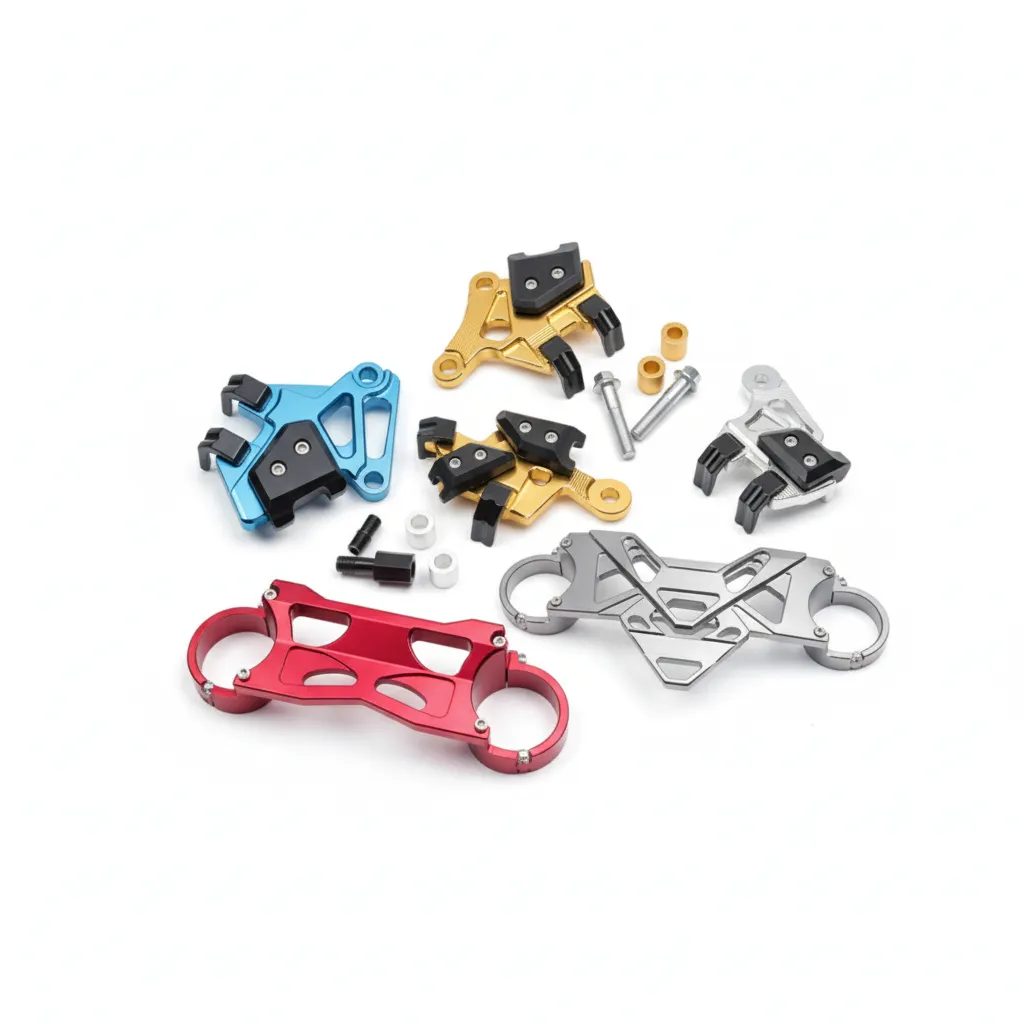
By using these tests, you can make sure that Kingham‘s brake system parts stay reliable and perform well. This focus on quality leads to safer vehicles and happy customers.
Fatigue Testing

Explanation of Fatigue Testing
Fatigue testing checks how materials react to repeated stress. This testing is very important for knowing how parts break under loads much lower than their maximum limits. Here are some main points about fatigue testing:
Aspect | Description |
|---|---|
Definition | Fatigue testing looks at changes in materials when they face repeated loads. |
Key Stages | 1. First, small damage starts and cracks form. 2. Then, cracks grow with each cycle. 3. Finally, a sudden break happens. |
Types of Fatigue Failure | 1. Mechanical Fatigue 2. Creep Fatigue 3. Thermo-mechanical Fatigue 4. Corrosion Fatigue 5. Fretting Fatigue |
Fatigue Limit | The stress level that allows a material to handle endless cycles without breaking. |
Testing Approaches | 1. Strain-Life Approach 2. Stress-Life Approach 3. Damage-Tolerant Approach |
Relevance of Fatigue Testing in Product Durability
Fatigue testing is very important for checking how long automotive parts last. It mimics the repeated stresses that parts face in real life. This testing helps you see possible failures, which is key for making safe and reliable parts. Here are some benefits of fatigue testing:
It gives information about how long products last.
It helps improve designs, making them safer.
It ensures parts can handle everyday use.
Relation of Fatigue Testing to Process Capability
Fatigue testing connects directly to process capability in quality management. It checks the quality and flaws in materials, which are important for seeing how well your processes work. Here’s a summary of key findings:
Key Findings | Description |
|---|---|
Fatigue Strength Assessment | Looks at quality and flaws in materials, which is key for process capability. |
Influence of Manufacturing Quality | Changes in manufacturing quality greatly affect fatigue performance, linking it to quality management. |
By learning about fatigue testing, you can make your products last longer and improve your manufacturing processes. This focus on quality leads to safer vehicles and happier customers.
Salt-Spray Testing
Discussion of Salt-Spray Test
Salt-spray testing is very important for checking how well materials resist rust. This test copies tough conditions that car parts face. You can see how different coatings and materials hold up over time. The steps for salt-spray testing are:
Preparation: Clean the samples and place them at a 15–20° angle in the chamber with a 5% NaCl solution. Keep the pH between 6.5 and 7.2.
Chamber Setup: Set the temperature to 35°C ±2°C, with humidity at 95% ±2% and controlled air pressure.
Test Execution: Create fog by spraying the salt solution, exposing samples for 24 hours to over 1,500 hours.
Validation: Check that the spray rate and uniformity meet the rules, checking pH and solution levels often.
Completion: Rinse samples after testing and look for rust, comparing results to acceptance standards.
Application of Salt-Spray Test in Corrosion Resistance
You can use salt-spray testing to check many car parts, like underbody coatings, electrical systems, and battery cases. This method helps makers choose good rust-resistant coatings. It is very important for making sure car parts last and are safe, especially in electric and hybrid cars.
Salt-spray testing speeds up rust exposure, letting you see how well coatings protect. The test length changes based on how well the coating resists rust, with longer tests showing better durability.
Impact of Salt-Spray Testing on Quality Assurance
Salt-spray testing greatly helps overall quality assurance in the car industry. It shows that vehicles can handle tough conditions and resist rust over time. Here are some main benefits:
Boosts product quality and makes car parts last longer.
Makes sure parts meet rust resistance rules.
Lowers the chance of rust-related problems.
Summary of Kingham’s Inspection Standards and Process Protocols
Comprehensive Inspection Standards
Kingham has strict inspection standards to ensure product reliability. These standards make sure every product meets high-quality goals.
Rigorous Process Protocols
Kingham’s strict process protocols stop defects and failures. By setting tough guidelines, the company reduces mistakes, which is key for keeping product quality.
Emphasis on Strict Compliance and Standardization
Strict compliance and standardization in Kingham’s processes build trust with customers. Following quality standards consistently builds confidence, ensuring reliable products that meet specifications.
Bringing together IQC, Cpk, and different testing methods is very important for making products more reliable. Here are some main points to keep in mind:
IQC makes sure you check incoming materials. This helps find quality problems early. It saves money and improves how suppliers control quality.
Cpk and Cp help you look at how well your process works compared to specifications. They show how steady your processes are in meeting quality needs.
Process capability studies check how well your processes create outputs within set limits. This ensures you always meet quality standards.
By focusing on these parts, you can greatly improve your manufacturing processes and provide high-quality products to your customers. 🌟
FAQ
What is the purpose of Cpk in quality control?
Cpk shows how well your process makes products within set limits. It helps you find problems and keep quality steady. This means fewer defects in your manufacturing.
How does torque testing improve product safety?
Torque testing checks that all fasteners and parts are tightened correctly. This stops failures during use, making automotive parts safer and more reliable.
Why is fatigue testing important for automotive parts?
Fatigue testing looks at how materials react to repeated stress. This testing helps predict how long products will last. It ensures parts can handle daily use without breaking, which improves durability.
What does salt-spray testing evaluate?
Salt-spray testing checks how well materials and coatings resist rust. It mimics tough conditions, helping makers pick good rust-resistant options for car parts.
How can I improve my process capability?
You can improve process capability by looking at Cpk values, using strict testing methods, and improving your manufacturing steps. Focus on reducing differences and keeping quality steady to meet customer needs.