


When a guest’s first ride is a bouncy shuttle across cobblestones, you hear about it. When a cart sits idle because of worn bushings, you pay for it. For resort and hotel shuttle fleets, the sweet spot sits between ride comfort that protects your brand and costs that protect your budget. This comparison explains the golf cart suspension comfort vs cost trade-offs you’ll face—and how to spec wisely for your routes, loads, and maintenance capacity.
The suspension architectures you’ll actually choose between
Solid axle with leaf springs
- What it is: A simple, durable setup—especially on the rear axle—that keeps costs down.
- Why resorts pick it: Lowest CAPEX, easy to service, and fine for flat, paved loops.
- The trade-off: More vibration and noise on rough paths and speed humps compared with independent designs. Industry explainers describing these differences emphasize solid axle/leaf as the budget choice with harsher NVH on uneven surfaces; see the concise overviews by Extreme Kartz in 2024 and similar trade articles that compare golf cart suspension layouts, such as Gorilla Rides EV’s 2024 explainer: architecture pros and cons for golf carts and ride quality basics for golf cart suspension.
Independent suspension (IFS/IRS) with coil-over shocks
- What it is: Each wheel moves more independently via A-arms and coil-overs.
- Why resorts pick it: Best ride comfort and stability on mixed surfaces; improved passenger perception on gravel, turf transitions, and decorative pavers.
- The trade-off: Higher parts count and cost. Overviews published in 2024–2025 note that independent designs deliver superior bump isolation and steering precision relative to solid axles; see the 2024 system overview by Extreme Kartz and 2024 lift kit geometry discussions that touch on IFS-like behavior from GolfCartTireSupply: lift kit types and handling implications.
Rear coil-over add-ons
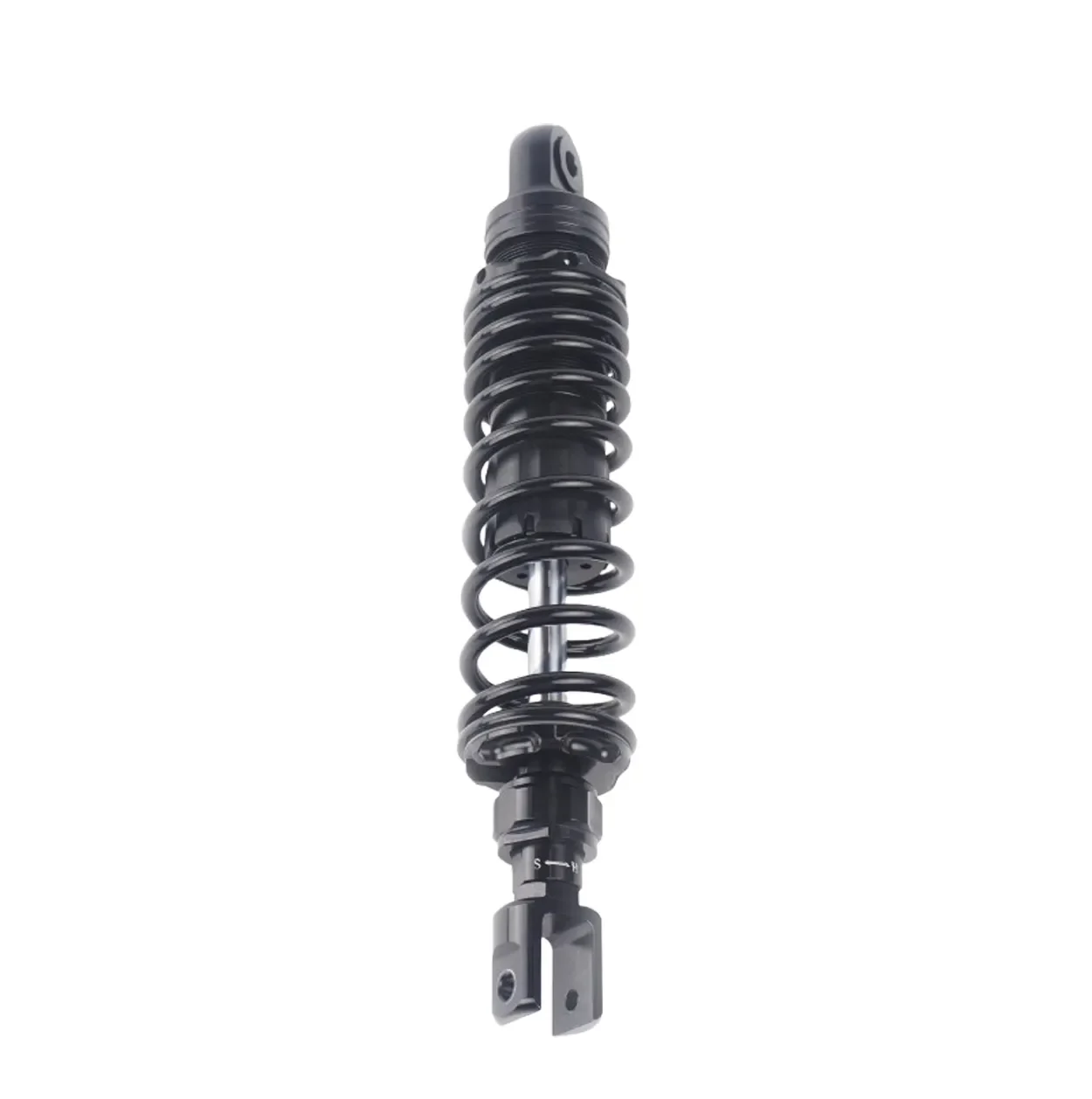
- What it is: Replacing or augmenting rear springs with coil-over shocks to control damping better than leaf-only setups.
- Why resorts pick it: A practical middle ground that moderates bounce and sag with moderate cost.
- The trade-off: Not as plush as full IFS/IRS, but noticeably better control over repeated bumps. Trade overviews in 2024 describe rear coil-over arrangements improving damping control relative to leaf-only setups: suspension systems overview.
Air-assist or full air shocks
- What it is: Air springs with compressors/valves for ride-height and stiffness adjustability as loads vary.
- Why resorts pick it: Useful for variable luggage loads, steep ramps, or ADA equipment where on-demand clearance matters.
- The trade-off: Highest cost and added maintenance. According to Tara Electric Vehicles’ 2025 guide, air systems introduce electrical draw and leak points that raise TCO; fleets should adopt them only when variability clearly justifies complexity: air shocks pros and cons for golf carts.
Authoritative component resources also clarify shock design differences that underpin these architectures. For example, Monroe’s technical guidance (2023) contrasts twin-tube (smooth, everyday comfort) and monotube (firmer control, better heat dissipation) designs—relevant when you tune for duty cycle and heat: twin-tube vs monotube shocks explained.
Comfort vs cost—what changes when you upgrade
Here’s the practical picture when you move up the comfort ladder:
- Complaint risk drops as you go from leaf-only to coil-over to independent designs. Mixed surfaces—pavers, turf edges, gravel—benefit most.
- Parts and labor rise with complexity. More bushings, arms, and joints mean more inspection points and occasional replacements.
- Heat and utilization matter. Continuous shuttle duty can warm shocks; monotubes resist fade better than basic twin-tubes, which is why higher-spec carts or premium upgrades often choose them, as summarized in Monroe’s 2023 shock design brief.
- Energy and weight shift the equation. Air systems add compressors that draw power. Lithium battery conversions, by contrast, reduce curb weight by roughly a few hundred pounds versus lead-acid packs, which can ease suspension wear and improve range; 2024–2025 battery conversion guides consistently highlight these weight reductions and their qualitative benefits: lithium conversion weight impacts and 48 V lithium lifespan and benefits.
If you want a measurement frame for guest comfort, safety agencies often reference ISO 2631-1’s frequency-weighted acceleration bands to interpret whole-body vibration. While it isn’t a resort-specific standard, it gives teams a common language for “not uncomfortable” versus “uncomfortable” zones and can be used during pilot tests on your property with a seat-pad accelerometer. See the ISO organization’s overview and the UK HSE’s 2024 WBV calculator for context: ISO 2631-1 overview and HSE whole-body vibration calculator.
Golf cart suspension comfort vs cost: the practical decision map
Think in scenarios rather than components first.
- Paved, flat loops with occasional speed humps: Solid axle with heavy-duty leaf springs and quality twin-tube shocks usually suffices. If humps are severe or carts frequently carry luggage, consider rear coil-overs to tame after-bounce.
- Mixed surfaces (pavers, turf connectors, gravel), short ramps, high guest-experience sensitivity: Favor factory IFS/IRS models or front A-arm coil-over upgrades. Monotube shocks help on long duty cycles; see lift kit geometry and handling notes.
- Variable loads (luggage spikes, ADA equipment) or steep ramps: Air-assist can be justified, but weigh compressor power draw and maintenance overhead against actual route needs; for an overview, review air shocks trade-offs.
- Coastal properties: Specify corrosion protection up front. Request evidence of salt-spray or cyclic corrosion testing and use stainless hardware in splash zones. Standards and lab guides note ASTM B117 salt-spray and cyclic corrosion testing as relevant validation methods: ASTM B117 reference and cyclic corrosion testing guide.
As you weigh options, remember the SEO core topic—golf cart suspension comfort vs cost—hinges on your route variability and guest expectations. Premium comfort pays back fastest on mixed, decorative surfaces where NVH is most noticeable. On uniform, smooth loops, cost control tends to win.
Component guide for fleet spec’ing
Springs
- Leaf springs remain the simplest way to handle steady loads. Dual-action or heavy-duty leaves resist sag for 4–6 passenger carts with luggage. Trade sources in 2023 describe how dual-action designs help preserve ride height under load: dual-action vs heavy-duty leaf springs.
- Coil springs allow more precise tuning with matched dampers, particularly in independent setups. For rear-only upgrades, coil-overs can reduce bounce and improve control.
Shocks and damping
- Twin-tube: Generally smoother initial response and budget-friendly; suited to lower-speed, lighter-duty routes. As Monroe’s 2023 explainer notes, they retain more heat under continuous use.
- Monotube: Faster response, better heat management (less fade), favored for high-utilization shuttles or mixed surfaces.
- Remote reservoirs: Increase oil volume and heat capacity—useful for sustained duty in hot climates or with frequent speed humps.
Bushings, alignment, and tires
Quality elastomer or sealed bushings reduce squeaks and help maintain alignment; plan for alignment checks after major suspension service. Low-pressure, comfort-oriented tires add isolation; pair them with appropriate wheel offsets to avoid geometry issues.
Maintenance cadence
- Fleet checklists in 2024 recommend quarterly visual inspections of shocks, springs, and bushings, with annual comprehensive checks and lubrication where applicable. Align your CMMS with these intervals and tie inspections to guest-complaint monitoring: fleet service schedule example.
TCO and procurement checklist
Use this condensed checklist to structure RFPs and approvals:
- Application profile: Route surfaces, grades, average speed, passenger mix, luggage frequency.
- Architecture choice and rationale: Solid axle/leaf, coil-over enhancement, IFS/IRS, or air-assist; justify against comfort targets and route conditions.
- Component spec details: Spring type, damper type (twin-tube vs monotube), adjustability needs, travel and preload range.
- Vehicle mass and energy: Current curb weight; lithium conversion plans and expected range impacts; energy draw for any air system.
- Corrosion protection: Coatings (e-coat/epoxy/powder), stainless fasteners, anodizing for aluminum; salt-spray/cyclic corrosion test evidence.
- Maintenance plan: Inspection cadence, common failure modes (bushings, shock leakage), alignment schedule, spare-parts commonality across models.
- Labor and tooling: Estimated install hours for shocks/springs; serviceability on your specific models.
- Warranty and support: Parts and labor terms, availability of service manuals, local dealer coverage, replacement turnaround.
- TCO inputs: Kit CAPEX, install labor, downtime cost, expected component lifespan, energy impacts, and projected complaint reduction (qualitative unless site data exists).
- Compliance: LSV qualification if operating on public roads, FMVSS equipment, VIN/certification labeling.
Micro-spec example: premium guest shuttle (comfort-first)
Target use: Six-passenger guest shuttle on mixed pavers, turf connectors, and light gravel with frequent speed humps and continuous duty. Choose a model with factory independent suspension (IFS/IRS) and specify monotube coil-over shocks to limit heat-induced fade. Use comfort-oriented tires with appropriate load rating. If rear sag occurs under luggage spikes, consider a rear coil-over helper. For corrosion at coastal sites, request an e-coat plus powder topcoat and 316 stainless fasteners, referencing validation like ASTM B117 salt-spray exposure and, ideally, cyclic corrosion tests. Use a simple pilot: run a seat-pad accelerometer on a representative loop and compare results against ISO 2631-1’s indicative comfort bands to confirm the upgrade yields a “not uncomfortable” or “a little uncomfortable” range for the most common segments. Industry articles in 2024–2025 outlining IFS advantages on uneven paths and 2023–2024 shock design notes support this configuration for mixed-surface resorts: IFS overview reference and shock design behavior.
Micro-spec example: budget utility shuttle (cost-first)
Target use: Staff utility runs on smooth, paved resort back-of-house loops with occasional cargo. Retain a solid rear axle with heavy-duty dual-action leaf springs to manage load without sag. Pair with quality twin-tube shocks for a supple initial response at low speed. If tire clearance is needed, a modest front A-arm kit primarily for geometry—not height—can improve steering precision without chasing premium-ride goals. Build a maintenance rhythm around quarterly visual inspections and annual bushing/shock checks; track tire rotation to control alignment-induced wear. This spec aims to keep per-vehicle parts spend below mid-range upgrade levels while delivering adequate ride and stable handling. For leaf behavior context and pricing proxies on A-arm kits, see dual-action leaf spring guide and A-arm kit pricing ranges.
Practical example using Kingham Tech adjustable shocks
Disclosure: Kingham Tech is our product.
For premium guest shuttles where routes mix pavers, turf edges, and humps, adjustable damping helps you dial comfort without over-springing. A practical approach is to select adjustable coil-over shocks with compression, rebound, and preload adjustability, and consider remote reservoirs for properties with long continuous duty in hot weather. Kingham Tech’s adjustable shock families—developed for ATV/UTV duty that is analogous to resort shuttle loads—offer those features along with nitrogen charging and reservoir options. For an engineering overview of adjustability and reservoir use, see the brand’s page describing damping circuits and heat management in applications with sustained cycles: High-Performance Suspension for ATVs/UTVs. Start with moderate springing and soft-to-medium compression for pavers, then increase low-speed compression one or two clicks for speed humps to control pitch, keeping rebound balanced to avoid after-bounce. If your property plans a lithium battery conversion that reduces curb weight, recheck preload and clicker positions after the swap to maintain the same ride attitude.
Note: The ATV/UTV technical framing is used as an analogy; procurement teams should validate fitment and valving for specific cart models. Additional product details are available on Kingham’s component pages upon request.
Closing and next steps
Comfort and cost aren’t enemies—they’re dials. On smooth loops, solid axle plus quality twin-tubes keeps budgets intact. On mixed surfaces and long duty cycles, independent suspension and monotube coil-overs curb complaints and stabilize handling. For variable loads, consider air-assist only when the benefit clearly outweighs power draw and upkeep. Above all, write your spec to your routes, measure comfort on a real test loop, and commit to a quarterly/annual service rhythm. If you’re exploring adjustable shocks or remote reservoirs for higher-utilization shuttles, review the engineering overview and component options on Kingham’s site: Rear Shock Absorbers.
—
Sources and further reading
- Twin-tube vs monotube shock behavior (Monroe, 2023): technical comparison
- Air shocks pros/cons and maintenance considerations (Tara Electric Vehicles, 2025): air shocks guide
- IFS vs solid axle implications for ride quality (trade overviews, 2024–2025): suspension systems overview and lift kit types and handling
- Maintenance cadence for fleets (EVolution schedule, 2024): service schedule
- Comfort interpretation framework (ISO 2631-1 overview; HSE calculator, 2024): ISO 2631-1 overview and HSE WBV calculator